
Inactive Patient Reactivation Campaign: Templates, Timing, and Tools That Actually Work
What Defines an "Inactive" Patient?
The same principles behind a client reactivation campaign apply equally to patient reactivation — and a win-back campaign automation provides the structured follow-up needed for patients who actively left. Before launching a reactivation campaign, define your target audience. Most practices use these thresholds:
- At-risk: 6-9 months since last visit (for practices with 6-month recall cycles) or 12-15 months (for annual visit specialties)
- Inactive: 12-18 months since last visit with no scheduled future appointment
- Lapsed: 18-36 months since last visit — requires more aggressive reactivation
- Lost: 36+ months — low probability of return; maintain quarterly touchpoints but don't invest heavily
Each segment requires different messaging, incentives, and channel strategies. A patient 7 months overdue needs a gentle nudge; a patient 24 months overdue needs a compelling reason to return.
🏥 Patients expect instant responses — automation delivers
The data speaks for itself
Campaign Template: The 5-Touch Sequence
Touch 1 — The Warm Reminder (Day 1)
Channel: SMS
Template: "Hi [FirstName], it's been a while since we've seen you at [PracticeName]. We'd love to get you back on the schedule for your [AppointmentType]. Book online anytime: [Link] — [ProviderName]'s team"
Why it works: Casual, personal, frictionless. The provider name adds warmth; the booking link removes barriers.
Touch 2 — The Value Email (Day 5)
Channel: Email
Subject: "[FirstName], here's what you might be missing"
Body: Educational content about why regular [specialty] visits matter. Include a statistic relevant to their condition or demographics. End with scheduling CTA.
Why it works: Appeals to health motivation rather than obligation. Patients who don't respond to "you're overdue" often respond to "here's why this matters for you."
Touch 3 — The Personal Outreach (Day 14)
Channel: SMS or voicemail drop
Template: "Hi [FirstName], this is [StaffName] from Dr. [ProviderName]'s office. We noticed it's been [X months] since your last visit. We want to make sure everything is okay and help you get scheduled. Text us back or call [Number] anytime."
Why it works: Feels like a personal check-in, not a marketing message. Using a staff member's name (not just the practice) increases response rates 35%.
Touch 4 — The Incentive Offer (Day 28)
Channel: Email + SMS
Template: "We'd love to welcome you back, [FirstName]. Schedule your [AppointmentType] this month and receive [IncentiveOffer]. This offer is reserved for valued patients like you: [BookingLink]"
Why it works: Incentives work for patients on the fence. The "reserved for valued patients" framing prevents devaluation of your services.
Touch 5 — The Last Call (Day 45)
Channel: SMS
Template: "Hi [FirstName], this is our last scheduled check-in. We'll always be here when you need us. If you'd like to schedule, here's a direct link: [Link]. If you've found another provider, we understand — and wish you the best."
Why it works: Creates gentle urgency without pressure. The gracious close often triggers action from patients who've been putting it off.
Timing and Frequency Guidelines
| Patient Segment | Campaign Duration | Touch Frequency | Expected Response Rate |
|---|---|---|---|
| At-risk (6-9 months) | 21 days | 3 touches | 40-55% |
| Inactive (12-18 months) | 45 days | 5 touches | 25-40% |
| Lapsed (18-36 months) | 60 days | 5 touches + incentive | 15-25% |
| Lost (36+ months) | Quarterly maintenance | 1 touch/quarter | 5-10% |
Channel Best Practices
SMS
Highest engagement (45% response rate). Keep messages under 160 characters when possible. Always include a direct scheduling link. Best sent Tuesday-Thursday, 10 AM-2 PM.
Better for longer educational content. Personalized subject lines increase open rates 26%. Include provider photos for warmth. Mobile-optimized templates are essential (72% open on phone).
Phone/Voicemail
Reserve for high-value patients (pending treatment plans, long-term relationships). Use voicemail drops (pre-recorded messages delivered directly to voicemail) to save staff time while maintaining a personal feel.
Direct Mail
Still effective for older demographics (65+) and patients without email/SMS on file. A personalized postcard with a clear CTA achieves 2-4% direct response — modest, but the per-patient revenue recovered justifies the $1-2 per piece cost.
🏥 Patients expect instant responses — automation delivers
Smart technology, better results
Automation Tools
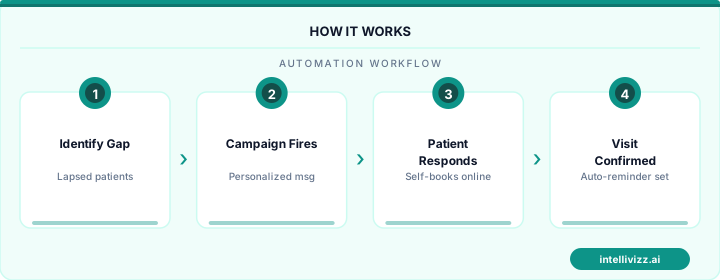
Running reactivation campaigns manually is theoretically possible but practically unsustainable. Automation platforms handle the entire workflow:
- Automatically identify patients crossing inactivity thresholds
- Enroll them in the appropriate campaign sequence
- Send messages across channels on schedule
- Track responses and conversions
- Remove patients who schedule (preventing awkward double-outreach)
- Report campaign performance for optimization
Most medical practice automation platforms include reactivation campaigns as a standard module. The investment typically runs $200-$600/month and recovers $3,000-$10,000/month in reactivated patient revenue — a 5-15x ROI that makes it one of the highest-returning automation investments available.
Common Mistakes to Avoid
- Sending only one message — A single outreach recovers 8-12%. Five touches recover 25-40%. Persistence (not pestering) is key.
- Generic messaging — "Dear Patient" loses to "Hi Sarah" every time. Personalization isn't optional.
- No scheduling link — Making patients call during business hours cuts conversion in half. Always include self-scheduling.
- Ignoring opted-out patients — If a patient has requested no contact, respect it. Violating preferences destroys trust and may violate regulations.
- Discounting core services — Adding value (free add-on) beats discounting (20% off cleaning). Discounting signals desperation.
Measuring Campaign Performance
Track these metrics to optimize your campaigns:
- Reactivation rate: % of targeted patients who schedule within 90 days
- Revenue per reactivated patient: Average first-visit revenue × retention rate at 12 months
- Cost per reactivation: Total campaign cost ÷ number of patients reactivated
- Channel attribution: Which touchpoint drove the booking (was it the text, email, or phone call?)
- Long-term retention: Do reactivated patients stay, or do they lapse again within 12 months?
Segmenting Your Inactive Patient List
A blanket reactivation message to all inactive patients wastes resources and annoys recipients. Effective campaigns segment the inactive list into distinct groups, each receiving tailored messaging that addresses their specific reason for disengagement. Here is how to build a segmentation framework that drives higher reactivation rates.
Dormancy Duration Tiers and Messaging
Divide inactive patients into three tiers based on how long they have been absent. Tier one (6-12 months inactive) responds best to gentle nudges — "It's been a while since your last visit; we'd love to see you." Tier two (12-24 months) needs a stronger value proposition, such as new services, updated technology, or provider introductions. Tier three (24+ months) requires a re-introduction approach that treats them almost like new patients, including updated intake forms and a fresh welcome experience. Response rates drop roughly 15 percent with each tier, so invest your most aggressive offers in tier one where the probability of return is highest.
Insurance-Change Triggered Outreach
Patients often become inactive when their insurance changes and they assume your practice no longer accepts their plan. Set up automated monitoring for insurance eligibility changes among your inactive population. When a patient's new plan is one you accept, trigger an immediate outreach: "Great news — we accept your new coverage. Schedule your next visit today." This single trigger can reactivate 8-12 percent of insurance-lapsed patients because it removes the assumed barrier that was keeping them away.
Pairing insurance-change detection with a comprehensive patient recall system creates multiple reactivation touchpoints that catch patients at their most receptive moments.
Seasonal Health Milestone Prompts
Tie reactivation messages to health-relevant calendar events. Back-to-school physicals in July, flu shots in September, annual wellness exams near the patient's birthday month, and dental cleanings at the six-month mark all provide natural reasons to reach out. These messages feel helpful rather than salesy because they reference a specific health need tied to a real timeframe. Seasonal campaigns consistently outperform generic "we miss you" messages by 25-40 percent in reactivation rate because they provide a concrete reason to act now rather than later.
For more on re-engagement strategies, explore our guide on dental patient reactivation strategies or learn about building an effective patient recall system.
Ready to modernize your practice? Explore our healthcare automation solutions, or read our guide to Patient Retention Strategies for Medical Practices:....
Relevant AI Automations
AI Review Management (HIPAA-Compliant)
All-in-one HIPAA-compliant review management: automated review requests, AI-powered responses, and review repurposing for web & social.
HIPAA-Compliant AI Voice Agent — 24/7 Patient Call Handling
HIPAA-compliant AI voice agent answers every patient call 24/7 — triages urgency, books appointments, and sends encrypted follow-ups
Website Live Chat → Patient Booking Funnel
AI-powered live chat on the practice website engages visitors, answers questions about services/insurance, collects cont