
Gym Review Automation: Turn Every Member Into a Google Reviewer
For gyms and fitness studios, Google reviews are the most cost-effective member acquisition tool available. When someone searches "best gym near me" or "yoga studio in [neighborhood]," they see star ratings and review counts before anything else. A gym with 200 reviews at 4.6 stars gets 4x more clicks than a gym with 20 reviews at 5.0 stars — volume signals legitimacy.
But gym owners face a unique challenge: members visit regularly, making it awkward to ask for reviews repeatedly. The solution is automated review requests triggered by specific milestones and moments of achievement — so the ask feels natural, timely, and relevant.
The Best Trigger Moments for Gym Review Requests
1. New Member 30-Day Check-In
The first 30 days determine whether a member stays or churns. If a member is still active at day 30, they've formed a habit and likely have positive feelings about their experience. This is your highest-converting review trigger.
Template: "Hey [Name], you've been crushing it at [Gym Name] for a whole month! 💪 If you're loving it so far, a quick Google review helps others in the area find their fitness home: [link]"
2. Fitness Milestone Achievements
When members hit milestones — 50th check-in, 100th class, first PR (personal record), or completing a challenge program — they're feeling accomplished and proud. These moments produce the most enthusiastic, detailed reviews.
Trigger from your gym management system when check-in count reaches defined milestones. Celebrate the achievement in the message first, then include the review request.
3. Post-Class Feedback (Group Fitness)
After a popular class — especially one with a charismatic instructor — members are energized and socially engaged. A post-class SMS sent 2 hours later captures that energy.
Template: "Great seeing you at [Class Name] today! 🔥 If you're enjoying our classes, a quick Google review helps more people discover [Gym Name]: [link]"
4. Membership Renewal / Anniversary
When a member renews (manually or auto-renews), they've made a conscious decision to continue. It's a natural moment to ask: "Thanks for sticking with us for another year! If you'd like to share what keeps you coming back, a Google review helps other people find their fit: [link]"
5. Personal Training Milestone
After completing a PT package or reaching a training goal, members have a tangible result to celebrate. Reviews from PT clients tend to be detailed about results achieved, which are highly persuasive to prospective members.

⭐ Your online reputation is your #1 marketing asset
Smart technology, better results
Building the Automated Workflow
Integration source: Your gym management system (Mindbody, Zen Planner, Glofox, Club Automation, Wodify) tracks check-ins, memberships, and class attendance. Connect it to your automation platform via API or Zapier.
Trigger logic:
- New member: trigger at check-in #10 (approximately 30 days)
- Milestone: trigger at check-in #50, #100, #200
- Class: trigger 2 hours after check-in to specific popular classes
- Renewal: trigger on membership renewal date
Frequency cap: Critical for gyms — members visit frequently. Cap review requests at once per 90 days per member, regardless of how many triggers they hit. Nobody wants to receive a review request every week.
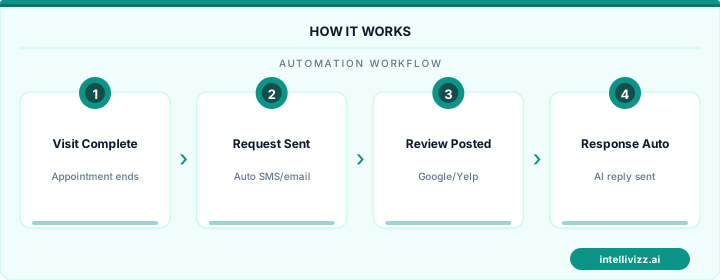
Sequence: SMS at trigger time → email at +24 hours → done. Two messages maximum for gym members, since you'll have another opportunity at the next milestone.
Seasonal Campaign Strategy
- January (New Year): Huge influx of new members. Set 30-day triggers to fire in February, capturing the excitement of the "new year, new me" energy before it fades.
- March-April (Pre-Summer): Members are motivated and seeing results. Run a "spring check-in" campaign for members who haven't left a review yet.
- September (Back to Routine): Post-summer return members are recommitting. Good moment for a renewal-triggered review request.
- November-December (Holiday): Members who stuck through the holiday season are your most loyal. A year-end gratitude message with a review request performs well.
Handling Negative Reviews for Gyms
Common gym complaints in reviews: equipment maintenance, cleanliness, crowding during peak hours, contract/billing disputes, and staff behavior. For each:
- Respond within 24 hours with empathy and a specific action: "We've addressed the equipment issue you mentioned — the cables on machine #12 were replaced this week."
- Never be defensive about crowding or pricing. Acknowledge and pivot: "We understand peak hours can be busy. Our early morning (5-7 AM) and midday (11 AM-1 PM) windows are our least crowded times."
- For billing disputes, always take it offline: "We'd like to review your account personally. Please contact [Name] at [email] so we can resolve this."
⭐ Your online reputation is your #1 marketing asset
The data speaks for itself
Metrics That Matter
- Review velocity: New reviews per month (target: 10-20 for a mid-size gym)
- Conversion rate by trigger: Which milestone generates the most reviews? (Typically 30-day check-in wins)
- Tour-to-join correlation: Track whether tour request volume increases with review count growth
- Retention correlation: Members who leave reviews have 30-40% higher retention rates — the act of publicly endorsing the gym reinforces their commitment
The gyms dominating local search in 2026 aren't the ones with the best equipment or the lowest prices — they're the ones with the most Google reviews. Automate your review collection, tie it to natural member milestones, and watch your online presence compound month over month.
Related Reading
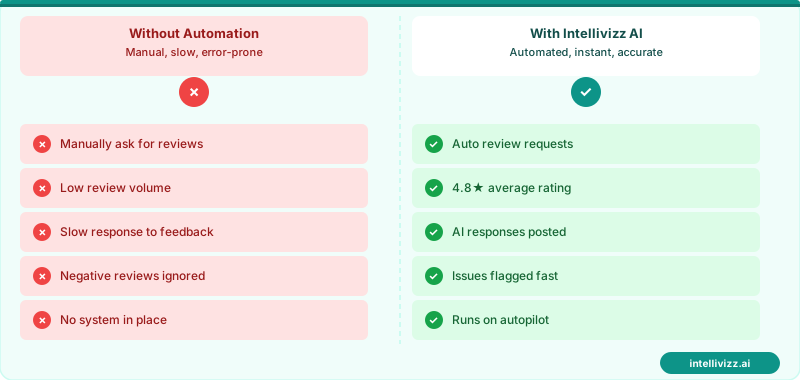
⭐ Your members love your gym. They just need a nudge to say so publicly.
Automated review requests can 3x your monthly Google reviews within 60 days.
The Google Review Flywheel for Fitness Businesses
Google reviews drive gym discovery more directly than almost any other marketing channel. When someone searches "gym near me" or "CrossFit [city]" on Google Maps, the ranking algorithm weighs three review factors heavily: total review count, average rating, and recency of reviews. A gym with 200 reviews averaging 4.7 stars will consistently outrank a gym with 50 reviews averaging 4.9 stars — because Google's algorithm interprets review volume as a signal of legitimacy and engagement.
The compounding effect is significant: gyms that actively collect reviews through automation consistently report that their Google Maps visibility improves within 60–90 days, which drives more organic discovery leads, which converts to more members, who generate more reviews. The flywheel, once started, becomes self-reinforcing.
Trigger Points for Gym Review Requests
Timing the review request to the right moment in the member journey dramatically affects response rates. The three highest-converting trigger points for gyms: immediately after a first successful class (new member enthusiasm is at its peak), at the 30-day mark (members who've made it 30 days are typically committed and positive), and after a personal training session (the one-on-one relationship creates a stronger connection to the request). Generic weekly blasts to all members perform significantly worse than these targeted trigger-based sends.
| Review Request Trigger | Review Submission Rate | Avg. Rating Received |
|---|---|---|
| After first class (day 1) | 18–24% | 4.8 |
| 30-day milestone | 22–30% | 4.7 |
| After PT session | 28–35% | 4.9 |
| Generic monthly blast | 4–8% | 4.4 |
Review automation works best when paired with strong member retention — explore the full picture with our guide to using an AI receptionist for gyms.