
Hotel Review Request Automation: How to Get More 5-Star Reviews Without Bugging Guests
Hotels live and die by reviews. A 2025 TripAdvisor study found that a one-star increase in average rating corresponds to an 11% increase in room rate pricing power and a 9% increase in occupancy. Yet most hotels collect reviews passively — hoping guests will leave feedback on their own after checkout.
The math is clear: hotels that actively and systematically request reviews outperform those that don't. Automation makes it possible to request reviews from every guest, at the perfect moment, without adding workload to already-stretched front desk and housekeeping teams.
The Unique Challenge of Hotel Review Collection
Hotels face challenges that other industries don't. Guests are transient — they check in, stay for 1-5 nights, and leave. The window to capture a review is narrow, and the guest is often traveling with limited attention for follow-up requests.
Additionally, hotels need reviews across multiple platforms: Google (for local search), TripAdvisor (for travel research), Booking.com (for OTA visibility), and sometimes Yelp or Expedia. A single review request system needs to intelligently route guests to the platform that matters most for your business.
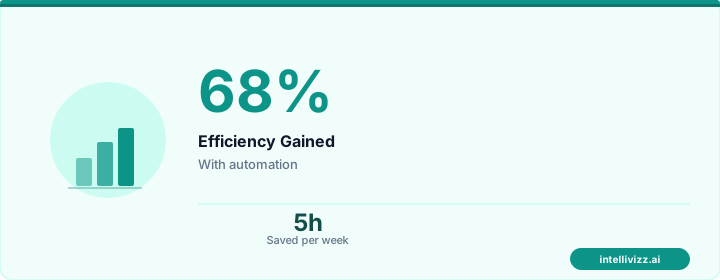
⭐ Your online reputation is your #1 marketing asset
Smart technology, better results
The Post-Checkout Automation Sequence
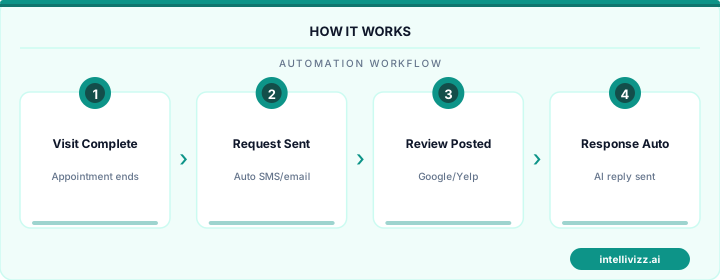
The most effective hotel review automation follows this timeline:
Checkout + 2 hours (SMS): "Thank you for staying at [Hotel Name]! We hope you had a wonderful experience. If you have a moment, a quick review helps future travelers: [Google link]"
Checkout + 24 hours (Email): A more detailed email thanking the guest, asking about their experience, and providing links to both Google and TripAdvisor. Include a photo of the property to trigger positive memory recall.
Checkout + 72 hours (Final SMS): A last gentle nudge for guests who haven't responded. Keep it short: "One last note — if you enjoyed your stay, a 30-second review means the world to our team: [link]"
This three-touch sequence typically converts 12-18% of guests into reviewers, compared to 2-4% from organic (unprompted) reviews.
Guest Sentiment Detection: The Pre-Filter
Not every guest had a great experience, and you don't want to push unhappy guests toward a public review. Smart automation systems include a sentiment pre-filter:
- Step 1: Send a brief satisfaction survey before the review request: "How was your stay? Reply 1-5." Or use a simple thumbs-up/thumbs-down interface.
- Step 2: Route satisfied guests (4-5 rating) to the public review link.
- Step 3: Route dissatisfied guests (1-3 rating) to a private feedback form or direct contact with your guest services team.
This approach protects your public rating while still capturing valuable feedback from unhappy guests. Some negative experiences can be recovered in real-time — a guest who reports a dirty room might update to a positive review if housekeeping resolves it within the hour.
Multi-Platform Strategy
Hotels need reviews on multiple platforms. The most effective approach:
- Primary platform (70% of requests): Google — most impact on local search and direct bookings.
- Secondary platform (30% of requests): TripAdvisor — critical for travel research and OTA visibility.
- Alternate by booking source: If a guest booked through Booking.com, request a Booking.com review. If they booked direct, request Google/TripAdvisor. This maximizes the SEO and conversion value of each review.
⭐ Your online reputation is your #1 marketing asset
The data speaks for itself
Integration with Property Management Systems
The trigger for your review automation needs to come from your PMS. Common integrations:
- Opera PMS / Oracle: API integration or nightly batch export of checkout records.
- Cloudbeds: Direct webhook integration with automation platforms.
- Mews / Little Hotelier: Zapier or native integrations available.
- Manual trigger: Front desk clicks a button at checkout to initiate the sequence.
The key is ensuring that every checkout triggers a review request. Even a 5% gap in trigger coverage represents missed reviews that compound over months.
Timing Optimization by Guest Type
Not all hotel guests are the same. Optimize your timing based on guest segments:
- Business travelers: Send the review request during business hours (9 AM - 5 PM). They're more responsive during work breaks than evenings.
- Leisure travelers: Send in the evening (7-9 PM) when they're relaxed and reflective about their trip.
- Extended stay guests: Don't send at checkout — they may be exhausted from a long stay. Wait 48 hours for a more considered response.
- Event/wedding guests: Wait 3-5 days. They're processing the event, not the hotel. The hotel experience surfaces later.
Measuring Review Automation ROI for Hotels
Track these hotel-specific metrics:
- Review velocity per platform: New reviews per month on Google, TripAdvisor, and OTAs
- Conversion rate: Reviews generated / review requests sent (benchmark: 12-18%)
- Sentiment pre-filter effectiveness: What percentage of surveyed guests score 4-5?
- ADR correlation: Track average daily rate against review score improvements
- Direct booking rate: Monitor whether increased Google reviews drive more direct bookings vs. OTA bookings
Hotels that automate review collection consistently see their Google profile strengthen within 6 months — driving more direct bookings, reducing OTA commission costs, and building a reputation that justifies premium pricing. The automation runs quietly in the background while your team focuses on delivering the guest experience that earns those reviews.
Related Reading
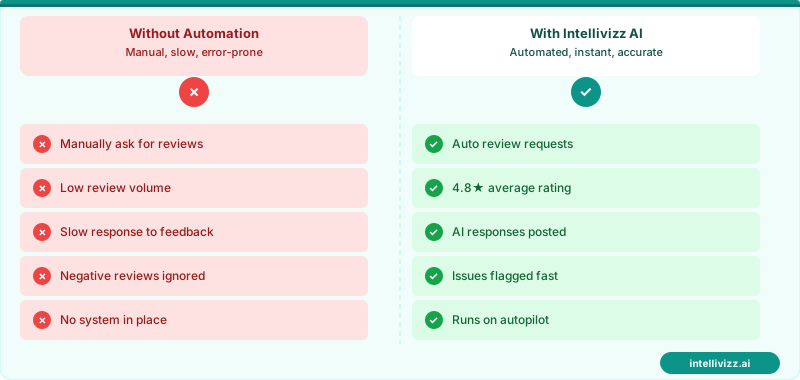
🏨 Every checkout is an opportunity to earn a review. Automation makes sure you don't miss one.
Hotels using review automation average 40% more monthly TripAdvisor and Google reviews.
The Post-Stay Review Window
Guests are most likely to leave a review in a specific window: 4–72 hours after checkout. Before 4 hours, they're still traveling or transitioning. After 72 hours, the stay has faded from the top of mind and review intent drops sharply. Automated post-stay review requests that hit within this window consistently outperform those sent later by 3–4x in submission rate. The optimal timing for most hotel segments is 6–8 hours post-checkout — after guests have reached their destination but before the day's obligations crowd out the memory.
Personalizing the review request by stay type improves conversion significantly. A guest who booked a couples spa package responds differently than a business traveler. The former values emotional connection ("we hope your stay was as special as you hoped"); the latter values efficiency ("quick feedback from your stay at [Hotel Name]"). A/B testing message tone by booking category typically yields a 20–30% lift in review submission rates.
Managing Multi-Platform Review Distribution
For hotel operators, the platform strategy for review requests matters as much as the timing. Different platforms carry different weight depending on your booking channel mix. If 60% of your reservations come through Booking.com, directing review requests primarily to Booking.com improves your ranking visibility on that platform. Google reviews matter most for direct booking search visibility. TripAdvisor still influences OTA rankings for properties in competitive markets.
Recommended platform split for a balanced hotel review strategy: 50% Google, 30% TripAdvisor, 20% primary OTA (Booking.com, Expedia, or Airbnb based on booking mix).
| Review Platform | Primary Impact | Best Request Channel |
|---|---|---|
| Direct booking search rank | SMS (post-checkout) | |
| TripAdvisor | OTA ranking, travel planning | Email (6–8 hrs post-checkout) |
| Booking.com | Booking.com visibility | Platform-native (auto-triggered) |
The same review automation principles apply across hospitality and service businesses — see our overview of gym review automation for a comparable implementation example.
Relevant AI Automations
No-Show Reduction SMS Sequence
Multi-touch reservation reminder: confirmation, 24-hour, and 2-hour reminders — reduces no-shows by 50-60%.
Shift Coverage & Call-Out Alert System
When a staff member calls out, instantly alerts available team members and fills the shift — eliminates scrambling.
Automated Loyalty & VIP Program
Track visits and spending automatically — reward loyal diners with personalized perks that drive 40% more repeat business.