
Dental Patient Reactivation Strategies: Bring Back Lapsed Patients Without Awkward Phone Calls
Why Dental Patients Disappear
Patient attrition in dental practices isn't usually dramatic — patients rarely call to say they're leaving. Instead, they simply don't rebook after their last cleaning, and the months quietly accumulate. Before you know it, a loyal patient of 5 years hasn't been seen in 18 months.
The reasons are remarkably consistent: life got busy (45%), insurance changed (20%), they moved (15%), cost concerns grew (12%), or they had a negative experience (8%). The encouraging news? Nearly 80% of lapsed patients are recoverable — they haven't chosen another dentist, they've just drifted.
🏥 Patients expect instant responses — automation delivers
See how automation transforms industry operations
Strategy 1: Automated Multi-Touch Recall Campaigns
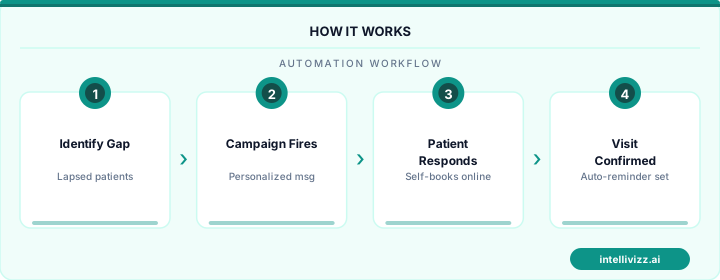
The foundation of any reactivation effort is a systematic automated recall system that doesn't rely on staff remembering to make calls. Effective campaigns use escalating touchpoints:
- Touch 1 (Month 7): Friendly text — "It's been a while since your last cleaning. Ready to schedule?"
- Touch 2 (Month 8): Email with educational content about why 6-month cleanings matter
- Touch 3 (Month 10): Personalized message from the hygienist — "Sarah, I'd love to see you back"
- Touch 4 (Month 12): Incentive offer — complimentary whitening touch-up with cleaning
- Touch 5 (Month 15+): "We miss you" postcard or text with a limited-time scheduling link
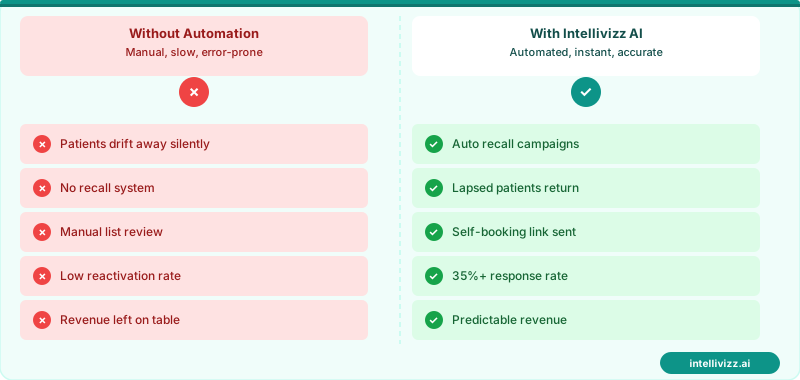
This sequence recovers 30-40% of lapsed patients — compared to 10-12% from a single phone call attempt.
Strategy 2: Insurance Change Outreach
January and July are peak insurance change periods. Many patients assume their old dentist isn't covered under their new plan and simply stop coming. Proactive outreach solves this:
- Send a message in January and July: "New insurance? We accept most plans. Let us verify your coverage — text us your new insurance info."
- Offer a complimentary insurance verification for returning patients
- For patients whose new plans you don't accept, explain out-of-network benefits (many patients don't realize they can still use preferred providers at slightly higher copays)
Strategy 3: The "Unfinished Treatment" Approach
Patients with pending treatment plans are the highest-value reactivation targets. They've already been diagnosed and presented with treatment — the hardest part is done. Yet 30-40% of presented treatment goes unscheduled.
Automated campaigns targeting patients with unscheduled treatment yield 40-50% reactivation rates because the message is specific: "Dr. Martinez recommended a crown for tooth #19 at your last visit. This treatment is important to prevent further damage. Schedule today: [link]"
Specificity creates urgency. A patient ignoring a generic "time for your cleaning" message will pay attention to "that tooth the doctor warned you about still needs work."
🏥 Patients expect instant responses — automation delivers
From manual processes to automated excellence
Strategy 4: Win-Back Incentives That Work
Not all incentives are created equal. Discounting your core service (cleanings) devalues your practice. Instead, add value:
- Complimentary add-on: Free fluoride treatment, oral cancer screening, or whitening touch-up with reactivation cleaning
- Priority scheduling: "As a returning patient, we've reserved a Saturday morning slot for you" (scarcity + convenience)
- New technology showcase: "Since your last visit, we've added digital scanners — no more impression trays!"
- Referral bonus: "Come back and bring a friend — you both receive a complimentary service"
The incentive should feel like a welcome-back gift, not a desperate discount. Practices that frame reactivation offers as "we've missed you and want to make your return special" outperform those offering percentage discounts by 25%.
Strategy 5: Lapsed Patient Surveys
For patients who don't respond to standard recall, a short survey can re-engage them while providing valuable feedback:
"We noticed you haven't visited in a while and want to understand why. Would you take 30 seconds to help us improve?" Link to a 3-question survey:
- What's the main reason you haven't returned? (multiple choice)
- What would make scheduling easier for you?
- Would you like us to reach out with a scheduling link? (yes/no)
Surveys achieve 15-20% response rates, and of those who respond, 40-50% indicate willingness to return. The survey itself serves as re-engagement — patients who interact with your practice in any way are more likely to rebook.
Strategy 6: Community and Social Re-Engagement
Lapsed patients may not respond to direct booking requests but will engage with valuable content. A social media and email strategy that provides dental health tips, practice updates, and community involvement stories keeps your practice top-of-mind.
When patients engage with your content (open emails, like social posts, click links), the system flags them as "warm" and triggers a personalized reactivation sequence. This approach works particularly well for patients in the 12-24 month lapsed window who've mentally disconnected from regular dental care.
Measuring Reactivation Success
Track these metrics monthly:
- Reactivation rate: % of lapsed patients who rebook within 90 days of campaign start (target: 25-40%)
- Campaign ROI: Revenue from reactivated patients vs. cost of automation + incentives
- Retention rate post-reactivation: % of reactivated patients who keep their next scheduled appointment (should be 80%+)
- Channel effectiveness: Which touchpoints (text, email, call, postcard) generate the most rebookings
Most practices find that automated reactivation delivers 8-12x ROI — a $400/month automation platform recovering $3,000-$5,000/month in reactivated patient revenue. Combined with broader dental marketing automation, you create a system where patient attrition is systematically detected and addressed before it becomes permanent.
🦷 Inactive patients aren't lost — they just haven't heard from you recently.
Dental reactivation campaigns average $180–$340 in recovered revenue per patient.
Why Dental Patients Go Inactive (And How to Address Each Reason)
Dental patient inactivity clusters around a handful of root causes, each requiring a different reactivation approach. Cost concerns are the most common — patients who let their insurance lapse or had an unexpected out-of-pocket expense often avoid scheduling rather than asking about payment options. Fear and anxiety are the second most common reason, particularly among patients who had a difficult procedure experience. Life transitions (moving, job change, new baby) account for most of the remainder.
Generic "we miss you" messages don't address any of these root causes. The highest-performing reactivation campaigns segment by inactivity reason and tailor the message accordingly. Cost-concerned patients respond to payment plan messaging. Anxious patients respond to empathetic language about sedation options and patient comfort. Life-transition patients respond to "welcome back" framing that makes returning feel easy and judgment-free.
Campaign Structure for Dental Reactivation
A three-message reactivation sequence sent over 21 days recovers 22–35% of inactive patients at dental practices, compared to 8–12% for a single mailer or phone campaign. The sequence: week one introduces a compelling reason to return (seasonal reminder, new patient amenity, payment plan), week two provides social proof (patient reviews, staff spotlight), and week three creates mild urgency (limited appointment availability for the month). Each message includes a direct online booking link.
Industry benchmark: a dental practice with 500 inactive patients running a well-structured reactivation campaign can expect 110–175 returning patients, generating $55,000–$87,000 in recaptured production.
| Inactivity Reason | Message Angle | Response Rate |
|---|---|---|
| Cost/insurance lapse | Payment plans, membership plans | 18–24% |
| Dental anxiety | Comfort options, sedation | 12–18% |
| Life transition | Welcome back, no judgment | 22–30% |
For ongoing prevention of patient attrition, see our evidence-based patient retention strategies for medical practices.
Ready to modernize your practice? Explore our healthcare automation solutions.