
Automated Patient Recall System for Dental Practices: Fill Your Hygiene Schedule Permanently
The Hygiene Attrition Problem
Every dental practice has a silent revenue drain: patients who complete a cleaning, schedule their next visit in 6 months, and never come back. They don't call to cancel — they simply don't show up, and after one failed reminder, they slip through the cracks permanently.
The numbers are sobering. The average dental practice loses 20-30% of its hygiene patient base annually through this passive attrition. For a practice with 2,000 active hygiene patients generating $200 per cleaning visit (twice yearly), losing 20% means forfeiting $160,000 in annual hygiene revenue — before accounting for the restorative treatment those patients would have needed.
🏥 Patients expect instant responses — automation delivers
Smart technology, better results
Why Patients Lapse
Understanding why patients don't return helps design effective recall strategies:
- Life gets busy (45%) — The appointment wasn't cancelled; it was simply forgotten among other priorities
- Insurance changes (20%) — New job, new plan, assumed the old dentist isn't covered
- Moved or relocated (15%) — Especially in transient markets; not worth pursuing
- Cost concerns (12%) — Co-pay increased or patient lost coverage; embarrassed to call
- Dissatisfaction (8%) — Actual negative experience; smallest segment but most vocal
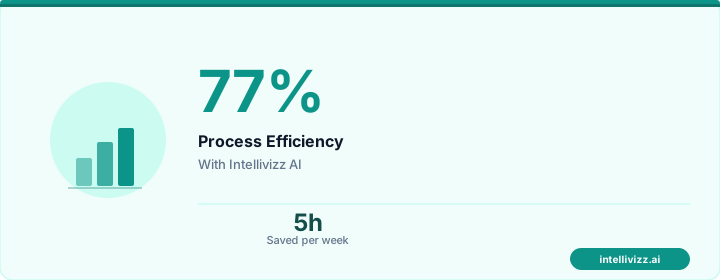
The critical insight: 77% of lapsed patients (busy + insurance + cost) are recoverable with the right outreach. They haven't chosen a new dentist — they've just drifted. The practice that reaches them first wins them back.
Manual Recall vs Automated Recall
The Manual Approach (What Most Practices Do)
Staff pulls a list of patients overdue for hygiene, makes phone calls during slow periods, leaves voicemails, and checks off names. This process suffers from predictable failures:
- Phone calls reach the patient only 15-20% of the time
- Staff gets pulled to other tasks; recall calls are deprioritized
- Patients 6+ months overdue are often abandoned as "too old to chase"
- No systematic follow-up for patients who don't respond to the first attempt
- Staff makes 8-12 calls per hour; most produce no result
The Automated Approach
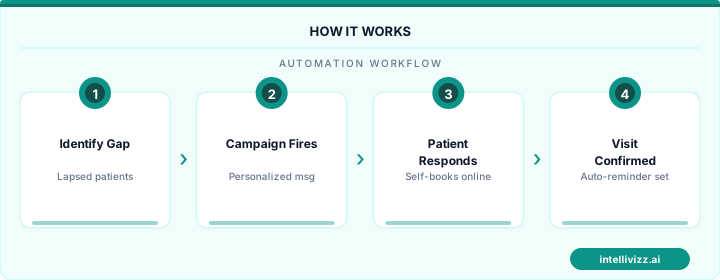
Automated recall uses multi-channel messaging with intelligent sequencing:
- 30 days before due date — friendly reminder via text: "Time for your 6-month cleaning! Book online: [link]"
- Due date — email with scheduling link and a note about the importance of preventive care
- 2 weeks overdue — text with urgency: "You're overdue for your dental cleaning. Open appointments this week: [options]"
- 6 weeks overdue — personalized email from the dentist: "We noticed you haven't been in for a while. Your oral health matters to us."
- 3 months overdue — final automated outreach with a special incentive: complimentary fluoride treatment or whitening touch-up with their cleaning
- 6+ months overdue — quarterly "we miss you" messages that keep the practice top-of-mind
Results from Automated Dental Recall
Practices implementing automated recall systems report consistent results:
- 35-50% of lapsed patients return within 90 days of automated outreach (vs 10-15% with manual calls)
- Hygiene schedule utilization increases from 75% to 90%+ within 6 months
- Staff saves 10-15 hours per week previously spent on manual recall calls
- Patient lifetime value increases 40% because retained patients receive ongoing preventive and restorative care
- ROI exceeds 10:1 — typical systems cost $200-$500/month and recover $3,000-$8,000/month in reactivated patients
🏥 Patients expect instant responses — automation delivers
The data speaks for itself
Designing Your Recall Campaign
Segment by Lapse Duration
Patients who are 1 month overdue need a different message than patients who are 18 months overdue. Recent overdue patients respond to simple scheduling convenience. Long-lapsed patients need relationship rebuilding and potential incentives.
Use Multiple Channels
Text messages have the highest immediate response rate (35-45%), but email captures the subset of patients who want more information before committing. Include both, plus optional phone outreach for high-value patients (those with pending treatment plans).
Include One-Tap Scheduling
Every recall message should include a direct link to book online. Forcing patients to call the office during business hours reduces conversion by 50%. Self-scheduling at 9 PM on a Wednesday is how modern patients book appointments.
Personalize the Message
Generic "time for your cleaning" messages underperform personalized ones by 30%. Include the patient's first name, their specific provider, and — where applicable — mention of their last treatment: "Hi Sarah, Dr. Martinez noticed your last cleaning was 8 months ago. Let's get you back on track."
Integration with Practice Management
Effective recall automation requires bidirectional integration with your practice management software:
- Automatic patient identification — system queries the PMS nightly for patients approaching or past their recall date
- Direct scheduling — when patients click to book, available slots pull from the PMS in real time
- Status updates — when a patient schedules through recall, the PMS record is updated and the patient exits the recall campaign
- Exclusion rules — patients who've already scheduled, transferred, or requested no contact are automatically excluded
Practices using dental marketing automation platforms typically find recall as a built-in module, but standalone recall systems offer deeper customization for practices with complex scheduling needs.
For practices also struggling with active appointment no-shows, combining automated recall with no-show reduction strategies creates a complete patient lifecycle management system — preventing attrition on both ends.
Frequently Asked Questions
How far back should I go when reactivating lapsed patients?
Patients who last visited within 24 months have the highest reactivation rates (30-50%). Beyond 24 months, rates drop to 10-15% but are still worth pursuing given the low cost of automated outreach. We recommend maintaining quarterly contact for up to 36 months.
Do automated recall messages feel impersonal?
Modern systems personalize every message with patient name, provider name, and visit history. Patients overwhelmingly prefer a timely, personalized text over silence or an awkward phone call from a staff member reading a script.
What's the best time to send recall messages?
Text messages perform best between 10 AM-2 PM on Tuesdays and Wednesdays. Emails perform best at 8 AM on weekdays. Avoid Mondays (people are catching up) and Fridays (people are checking out).
Multi-Channel Recall Campaign Design
Relying on a single communication channel for patient recall limits your reach and response rates. A multi-channel strategy meets patients where they are and increases the likelihood of reactivation through repeated, varied touchpoints. Here is how to design a recall campaign that leverages every available channel.
SMS vs Email vs Phone Effectiveness by Demographic
Patients aged 18-34 respond to SMS recall messages at rates of 38-45 percent, making text the dominant channel for younger demographics. Patients aged 35-54 show roughly equal response rates across SMS and email, with email generating slightly higher scheduling completion because it can include direct booking links with richer context. Patients over 65 still respond most reliably to phone calls, with a 52 percent contact rate compared to 28 percent for SMS in this age group. Map your patient demographics to channel preferences and weight your outreach accordingly, rather than defaulting to a one-size-fits-all approach.
Recall Interval Personalization
Standard six-month recall intervals work for routine cleanings, but not every patient fits that template. Periodontal patients may need three- or four-month intervals. Patients with a history of missed recalls may respond better to reminders sent at five months rather than six, catching them before the appointment falls off their radar entirely. Pediatric patients benefit from recalls timed around school schedules — scheduling during summer break or school holidays increases show rates by 20 percent. Configure your recall automation to assign intervals based on clinical history and patient behavior, not just a universal calendar rule.
Integrating personalized recall intervals with a robust dental patient reactivation strategy ensures that patients who slip through initial recall attempts are caught by secondary outreach campaigns.
Insurance Renewal Timing Alignment
Dental benefits that reset on January first create a natural urgency window in October through December, when patients realize they have unused benefits expiring. Trigger recall messages during this window that include benefit utilization language: "You have unused dental benefits expiring December 31st — schedule now to maximize your coverage." For patients with mid-year renewal dates, track their specific plan anniversary and send similar messages 60-90 days before benefits expire. This approach ties recall to financial motivation, which consistently produces higher scheduling rates than health-only messaging.
For more on patient re-engagement, explore our guide on annual wellness recall automation or learn about proven dental reactivation strategies.
Ready to modernize your practice? Explore our healthcare automation solutions.