
Patient Recall System for Healthcare: How to Keep Every Patient on Track Without Manual Follow-Up
The Preventive Care Compliance Gap
Preventive care is the foundation of every healthcare specialty, yet compliance rates are dismal. Only 40-50% of patients complete recommended screenings, vaccinations, and follow-up visits on schedule. For primary care practices, an annual wellness recall automation specifically targets the yearly checkup compliance gap. The result: conditions that could have been caught early progress to advanced stages, costing the healthcare system billions and costing patients their health.
For medical practices, the compliance gap is also a revenue gap. Every missed screening, unfilled recall, and delayed follow-up is a lost appointment slot and a missed opportunity to deliver care that improves outcomes.
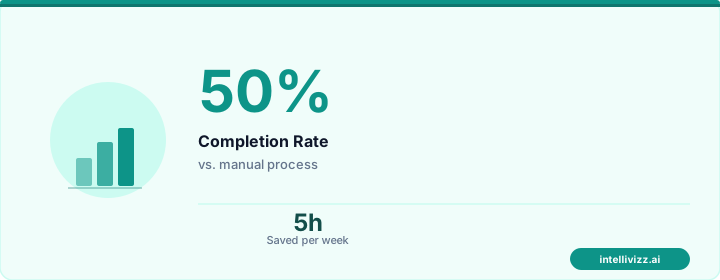
🏥 Patients expect instant responses — automation delivers
From manual processes to automated excellence
What a Patient Recall System Does
A patient recall system automatically identifies patients who are due or overdue for care and reaches out to them through their preferred communication channel. Unlike manual recall (staff pulling lists and making calls), automated recall runs continuously in the background:
- Queries the EHR nightly for patients approaching recall dates
- Sends personalized reminders via text, email, or phone
- Includes self-scheduling links for immediate booking
- Follows up with escalating messages for non-responders
- Removes patients from the campaign once they schedule or opt out
- Reports compliance rates by provider, condition, and patient segment
Recall by Specialty
Primary Care
Annual wellness exams, chronic disease management follow-ups, vaccination schedules, age-appropriate screenings (mammography, colonoscopy, etc.). Primary care recall generates the highest volume of reactivated appointments.
Dental
Dental recall typically follows a 6-month hygiene cycle with additional recalls for periodontal maintenance (3-4 months) and pending treatment follow-up. The 6-month cycle creates a natural cadence for automated outreach.
Optometry
Annual eye exams, contact lens prescription renewals, glaucoma monitoring, diabetic eye exams. Optometry recall automation is particularly effective because most patients need annual visits but don't self-schedule.
Dermatology
Annual skin cancer screenings, acne treatment follow-ups, cosmetic procedure maintenance. Dermatology has long appointment lead times, making early recall (3 months before due date) essential.
Chronic Disease Management
Diabetes A1C monitoring (quarterly), hypertension follow-ups, medication management checks. These high-frequency recalls require tight integration with the EHR to track clinical triggers (e.g., A1C rising above 7.0).
Building Effective Recall Workflows
Step 1: Define Recall Protocols
For each appointment type, establish:
- Standard recall interval (6 months, 12 months, etc.)
- How early to begin outreach (30 days before due date is typical)
- Number of reminder attempts before escalation
- Channels to use at each stage
Step 2: Segment Your Patient Population
Not all patients need the same recall approach:
- Compliant patients (always schedule on time) — light-touch reminders, booking confirmation
- Occasional lapses (sometimes overdue 1-3 months) — standard multi-touch campaign
- Chronic no-schedulers (frequently overdue 6+ months) — aggressive multi-channel outreach with incentives
Step 3: Configure Automation Rules
Set up triggers that initiate recall sequences automatically. Common triggers include:
- Date-based: X months since last appointment of type Y
- Clinical: Lab value outside target range triggering follow-up
- Age-based: Patient turning 50 → colonoscopy recall; patient turning 40 → mammography recall
- Seasonal: Flu shot recalls in September-October, annual physical reminders in birth month
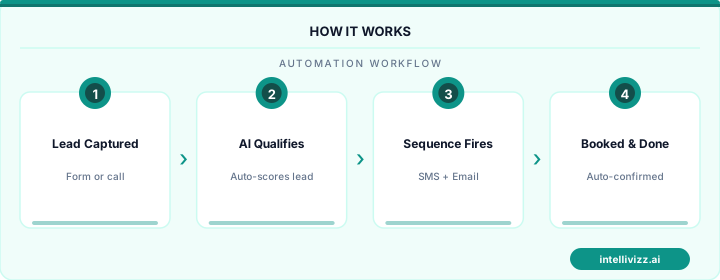
🏥 Patients expect instant responses — automation delivers
See how automation transforms industry operations
Impact on Practice Performance
| Metric | Without Recall System | With Automated Recall |
|---|---|---|
| Preventive care compliance | 40-50% | 70-80% |
| Recall-related appointments/month | 20-40 (manual calls) | 80-150 (automated) |
| Staff time on recall | 15-20 hours/week | 2-3 hours/week |
| Patient attrition rate | 18-25% | 8-12% |
| Revenue from recall appointments | $8,000-$15,000/month | $25,000-$60,000/month |
Technology Requirements
An effective patient recall system needs:
- EHR integration — bidirectional data flow to identify overdue patients and update records when appointments are booked
- Multi-channel messaging — SMS, email, and voice capabilities with patient preference management
- Self-scheduling integration — direct booking links that connect to your practice management system
- Reporting dashboard — real-time visibility into compliance rates, campaign performance, and revenue impact
- HIPAA compliance — encrypted communications, BAA execution, and audit trails
Practices already using an AI receptionist or patient communication platform often find that recall functionality is included or available as an add-on module, reducing the need for additional vendor relationships.
Frequently Asked Questions
How do I handle patients who don't respond to any outreach?
After 3-4 automated attempts over 60-90 days, flag these patients for a personal phone call from their provider's nurse or MA. A clinical outreach ("Dr. Smith is concerned you haven't had your annual screening") has 3x the response rate of an administrative message.
Should recall messages include clinical information?
Keep messages general to comply with HIPAA. "Time for your annual checkup" is fine; "Time for your diabetes A1C test" requires the patient to have opted into clinical messaging. When in doubt, use generic language with a link to the patient portal for details.
What's the ROI timeline for implementing a recall system?
Most practices see positive ROI within 60 days. The initial setup (EHR integration, protocol configuration, patient preference collection) takes 2-4 weeks, with the first automated campaigns launching in month 2 and measurable results appearing by month 3.
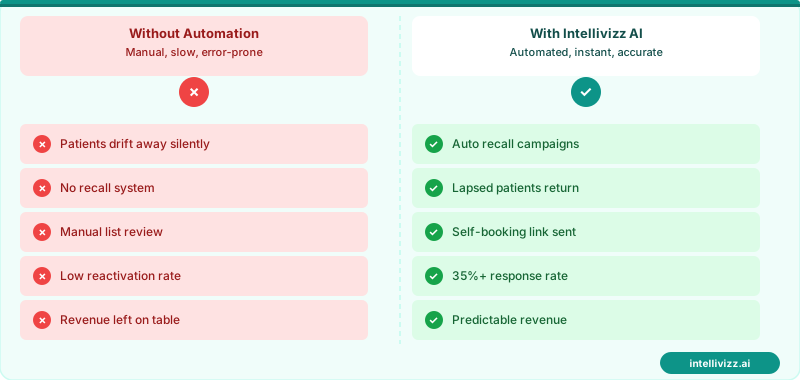
🔔 The patients who need to return most are often the ones who forget to schedule.
Automated recall systems recover dormant patients before they become ex-patients.
The Revenue Inside Your Existing Patient Database
For most healthcare practices, the largest untapped revenue source isn't new patient acquisition — it's the existing patient database. Industry data consistently shows that 20–35% of active patients are overdue for a recall visit at any given time. For a practice with 2,000 active patients and an average visit value of $250, that's $100,000–$175,000 in dormant revenue sitting in the schedule management system, waiting to be activated with the right outreach.
The challenge is that manual recall is labor-intensive at scale. Calling 400 overdue patients per month is a part-time job. Automated recall systems eliminate the labor cost while personalizing each outreach to the specific patient's care history — "you're due for your annual wellness exam" rather than a generic "we miss you" message.
Segmenting Recall Campaigns by Patient Value and Risk
Not all recall campaigns should be created equal. High-value patients (those with complex care needs, chronic conditions, or high procedure volumes) warrant a more personalized, higher-touch outreach — a phone call from a care coordinator, not just an automated text. Moderate-value patients can be effectively recalled via SMS and email sequences. Low-engagement patients who haven't responded to any outreach in 18+ months are candidates for a final reactivation attempt before archiving.
| Patient Segment | Recall Method | Reactivation Rate |
|---|---|---|
| High-value (top 20%) | Phone + personalized email | 45–60% |
| Moderate-value (middle 60%) | SMS + email sequence | 25–40% |
| Low-engagement (bottom 20%) | Final email + archive | 8–15% |
Once a recalled patient returns, a strong patient retention strategy ensures they stay engaged for the long term.
Ready to modernize your practice? Explore our healthcare automation solutions, or read our guide to Inactive Patient Reactivation Campaign: Templates,....
Relevant AI Automations
AI Review Management (HIPAA-Compliant)
All-in-one HIPAA-compliant review management: automated review requests, AI-powered responses, and review repurposing for web & social.
HIPAA-Compliant AI Voice Agent — 24/7 Patient Call Handling
HIPAA-compliant AI voice agent answers every patient call 24/7 — triages urgency, books appointments, and sends encrypted follow-ups
Website Live Chat → Patient Booking Funnel
AI-powered live chat on the practice website engages visitors, answers questions about services/insurance, collects cont