
How to Reduce Appointment No-Shows: 12 Evidence-Based Strategies for Medical Practices
The average no-show rate across medical practices is 18-23%, with some specialties (behavioral health, dermatology) seeing rates above 30%. Each missed appointment costs a practice $200-$500 in lost revenue — and the cascade effects (wasted staff time, delayed patient care, schedule disruption) multiply that impact. Here are 12 strategies proven to reduce no-shows, ranked by impact and ease of implementation.
Tier 1: High Impact, Easy Implementation
1. Multi-Channel Automated Reminders
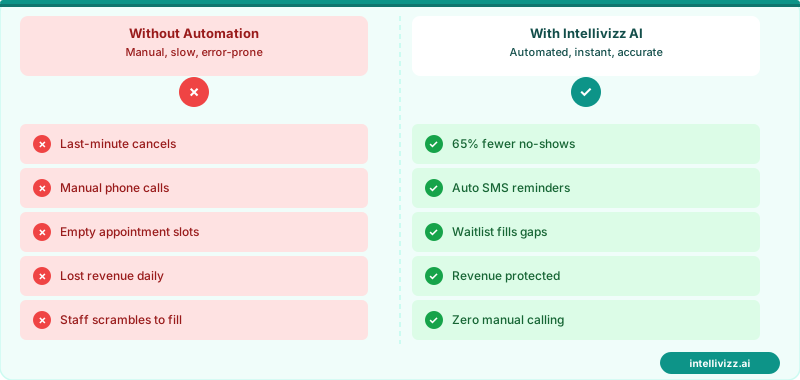
This is the single most effective intervention. Automated reminders via SMS, email, and phone calls reduce no-shows by 29-39% according to a meta-analysis in BMC Health Services Research. The key is multi-channel — a text message alone is good, but text + email + phone reduces no-shows more than any single channel.
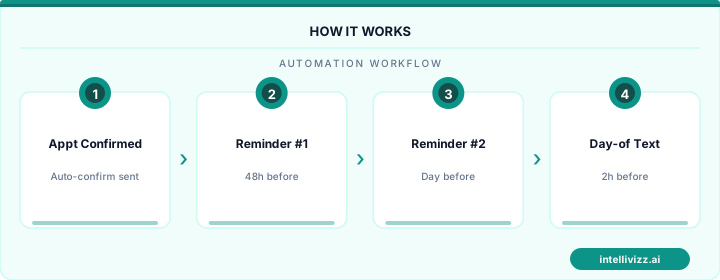
Optimal timing: send an initial confirmation immediately after booking, a reminder 7 days before (for appointments booked far in advance), a reminder 48 hours before with prep instructions, and a day-of reminder on the morning of the appointment. Each reminder should include a 1-tap option to confirm, reschedule, or cancel.
2. Two-Way Text Communication
Patients who can reply to a text message with questions or rescheduling requests are 3x less likely to no-show than those who receive one-way notifications. Enable two-way texting and ensure someone (or an AI system) monitors and responds to incoming patient texts in real-time.
3. Easy Self-Service Rescheduling
Many no-shows happen because the patient can't make the appointment but finds it too difficult to reschedule. Provide a direct link in every reminder that lets patients reschedule with 2-3 taps — no phone call required. Practices that implement self-service rescheduling see 40-50% of potential no-shows convert to rescheduled visits instead.
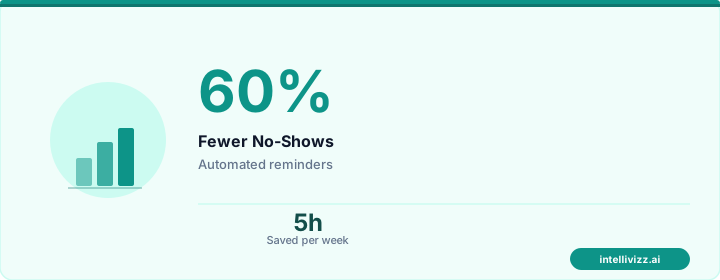
📱 Reduce no-shows by 30-40% with smart reminders
Smart technology, better results
Tier 2: High Impact, Moderate Implementation
4. Waitlist-Based Backfilling
When a patient cancels, automatically offer the slot to patients on your waitlist. Automated cancellation backfill systems can recover 40-60% of cancelled slots within 2 hours by texting waitlisted patients with a first-come, first-served offer.
5. Strategic Overbooking
Use historical no-show data by time slot, provider, and appointment type to strategically overbook high-risk slots. AI-powered predictive models take this further by scoring each individual appointment's no-show probability and recommending overbooking only when the data supports it.
6. Same-Day or Next-Day Appointments
No-show rates decrease dramatically as the gap between booking and appointment shrinks. Reserve a portion of your daily schedule for same-day and next-day slots. Practices that offer same-day availability for acute concerns see overall no-show rates drop 15-20% because patients aren't booking 3-4 weeks out and then forgetting.
7. New Patient Engagement Calls
New patients are 2-3x more likely to no-show than established patients. A personal welcome call from the office within 24 hours of booking — confirming the appointment, explaining what to bring, and answering questions — dramatically reduces first-visit no-shows. An AI receptionist can handle these calls automatically at scale.
Tier 3: Moderate Impact, Requires Policy Changes
8. No-Show and Late Cancellation Fees
A $25-$50 no-show fee, clearly communicated at booking and in reminders, creates financial accountability. Research shows that the mere existence of a fee (even if rarely enforced) reduces no-shows by 10-15%. Communicate the policy empathetically: "We reserve appointment times exclusively for you. If you need to cancel, please give us 24 hours' notice so we can offer your time to another patient."
9. Pre-Appointment Deposits
For high-value appointments (cosmetic procedures, initial consultations with specialists), requiring a small deposit at booking dramatically reduces no-shows. The deposit is applied to the visit cost, making it financially neutral for patients who attend. No-show rates for deposit-backed appointments typically run 3-5% versus 15-20% without deposits.
10. Transportation Assistance
Transportation barriers account for an estimated 10-15% of no-shows, particularly for elderly patients, those in rural areas, and Medicaid populations. Partner with ride-share medical transport services (Lyft Healthcare, Uber Health) or community transportation programs to offer rides to patients flagged as transportation-limited.
Tier 4: Supporting Strategies
11. Post-No-Show Recovery
When a no-show does occur, an immediate automated outreach sequence recovers 25-40% of patients: a text 15 minutes after the missed appointment ("We missed you today — is everything okay?"), followed by a rescheduling offer 24 hours later, and a final outreach at 1 week.
12. Patient Experience Improvement
Sometimes no-shows are a symptom of poor experience. Survey patients who no-show (anonymously) to understand why. Common reasons — long wait times, rude staff, difficulty parking, confusing office location — are all addressable once identified. Fixing the root cause reduces future no-shows across your entire patient base.
📱 Reduce no-shows by 30-40% with smart reminders
The data speaks for itself
Building Your No-Show Reduction Stack
Start with strategies 1-3 (automated reminders, two-way texting, self-service rescheduling) — these deliver the fastest ROI with minimal disruption. Add strategies 4-7 within the first 90 days. Evaluate policy changes (strategies 8-10) based on your practice culture and patient demographics.
The practices seeing the best results combine these strategies into an integrated automation system where AI handles prediction, communication, and backfilling while staff focus on the human touch points that matter most.
Want to see how these strategies come together in a single platform? Book a free consultation to get a no-show reduction plan customized for your practice.
📆 The businesses with the lowest no-show rates didn't get lucky — they built systems.
Proactive reminder systems can cut no-shows by 30–50% within 90 days.
The Confirmation vs. Reminder Distinction
Most practices send reminders. The practices with the lowest no-show rates send confirmation requests — and there's a meaningful behavioral difference between the two. A reminder says "your appointment is Tuesday at 2pm." A confirmation request says "your appointment is Tuesday at 2pm — please reply YES to confirm or NO to cancel." The latter creates a micro-commitment. Patients who actively confirm are 60% less likely to no-show than those who passively receive a reminder.
This distinction costs nothing to implement — it's a message rewrite, not a new system. Audit your current reminder messages and add a confirmation CTA to every one. This single change typically reduces no-shows by 15–20% before any other intervention.
Waitlists as a No-Show Mitigation Strategy
Even with the best reminder systems, some appointments will be cancelled or no-showed. The question isn't how to eliminate cancellations entirely — it's how to ensure every cancelled slot gets filled. Automated waitlists are the answer. When a patient cancels (even at the last minute), an automated system immediately texts the next person on the waitlist for that time slot. Practices with active waitlists fill 70–85% of last-minute cancellations, compared to 15–20% through manual staff outreach.
| Strategy | Effort to Implement | No-Show Reduction | Time to Results |
|---|---|---|---|
| Add confirmation CTA to reminders | Low | 15–20% | Immediate |
| Add 48-hour SMS reminder | Low | 20–30% | 1–2 weeks |
| Automated waitlist for cancellations | Medium | Revenue recovery 70–85% | 2–4 weeks |
| No-show recovery sequence | Medium | 35–50% reschedule rate | 2–4 weeks |
When a patient does no-show despite your best reminder system, automated recovery sequences can still save the revenue — learn how in our guide to no-show recovery automation.
Ready to get started with automation? Explore our AI automation solutions, or read our guide to How to Reduce No-Shows in Your Medical Practice:....