
No-Show Recovery Automation: Turn Missed Appointments into Rescheduled Revenue
The Recovery Window Is Shorter Than You Think
When a patient doesn't show up, there's a brief window — roughly 2-4 hours — during which they're most receptive to rescheduling. They're likely feeling some guilt about missing the appointment, they still remember they needed the care, and they haven't yet pushed the issue to the back of their mind. After 24 hours, recovery rates drop by half. After a week, the patient has mentally moved on.
Yet most practices wait 1-3 days to follow up with no-shows, and the follow-up is a single phone call that reaches voicemail 70% of the time. It's no wonder that traditional no-show recovery rates hover at 10-15%.
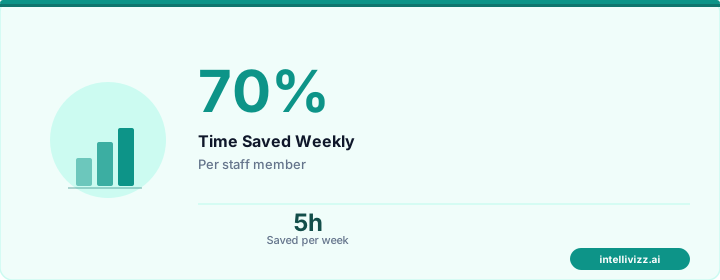
📱 Reduce no-shows by 30-40% with smart reminders
From manual processes to automated excellence
How Automated No-Show Recovery Works
Automated recovery systems detect no-shows in real time and immediately execute a recovery sequence:
Minute 0: Detection
The practice management system marks the patient as a no-show (automatically at 15 minutes past appointment time, or manually by staff).
Minute 15: First Outreach
An automated text message is sent: "We missed you at your [time] appointment today. We hope everything is okay. Would you like to reschedule? Reply YES for available times this week."
Hour 2: Follow-Up
If no response: "We have openings this week for your rescheduled visit with Dr. [Name]: [Option 1], [Option 2], [Option 3]. Reply with your preferred time."
Next Day: Email + Scheduling Link
Email with a detailed message acknowledging the missed appointment, emphasizing the importance of the visit, and providing a self-scheduling link with prominently displayed available times.
Day 3: Final Recovery Attempt
Last message: "We still have your appointment to reschedule. Book online anytime: [Link]. If you need to be seen sooner, call us at [Number]."
Recovery Rates by Channel and Timing
| Channel | Timing | Response Rate | Rescheduling Rate |
|---|---|---|---|
| SMS | Within 15 min | 45% | 35% |
| SMS | 2 hours | 30% | 22% |
| Next day | 18% | 12% | |
| Phone call | Next day | 15% | 10% |
| Combined multi-channel | Full sequence | 55% | 35-40% |
The data is clear: speed and multi-channel outreach are the two biggest factors. A text within 15 minutes outperforms a phone call the next day by 3.5x.
Template Library for Recovery Messages
Empathetic First Touch
"Hi [Name], we noticed you weren't able to make your appointment today. No worries — life happens! Would you like to reschedule? Reply YES for this week's openings."
Urgency-Based Follow-Up (for clinical visits)
"[Name], Dr. [Provider] wanted to make sure you reschedule your [visit type]. This visit is important for [reason]. We have openings: [times]. Book here: [link]"
Convenience-Focused (for routine visits)
"Still need to reschedule your [visit type]? We have early morning, lunch, and after-work slots available. Pick a time that works: [link]"
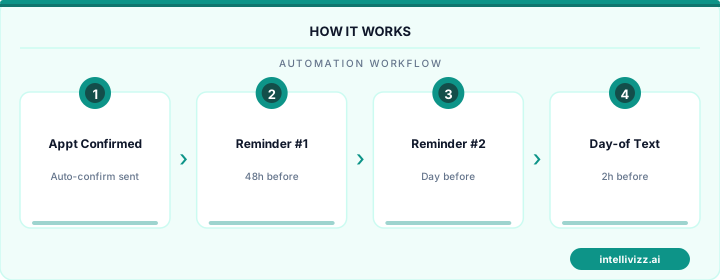
📱 Reduce no-shows by 30-40% with smart reminders
See how automation transforms industry operations
Combining Recovery with Prevention
The most effective practices don't just recover no-shows — they use no-show data to prevent future ones. When a patient no-shows and reschedules, the system flags them as high-risk for the next appointment and applies enhanced no-show prevention protocols: extra reminders, day-of confirmation requirements, and potential overbooking of their time slot.
Over time, this feedback loop reduces repeat no-shows by 40-50%, as patients who chronically miss appointments receive progressively more touchpoints.
Financial Impact
For a practice with 5 no-shows per day at $250 average appointment value:
- Without recovery: $1,250/day lost, $312,500/year
- With manual recovery (15%): $187/day recovered, $46,875/year
- With automated recovery (35%): $437/day recovered, $109,375/year
- Annual gain from automation: $62,500 additional recovery
At $200-$400/month for an automated recovery platform, the ROI is 13-26x. And that's before accounting for the slot-backfill opportunity: recovered no-shows free staff from manual callbacks, allowing them to manage waitlist backfilling for the current-day empty slots.
Combined with cancellation revenue recovery and preventive strategies, automated no-show recovery becomes one piece of a comprehensive scheduling optimization system that maximizes every available appointment slot.
Frequently Asked Questions
Should I charge no-show fees alongside automated recovery?
If you implement automated recovery, you may not need no-show fees. Recovery brings back the revenue; fees bring back resentment. Reserve fees for chronic no-showers (3+ in 12 months) as a deterrent, but lead with recovery for occasional misses.
What if the patient no-showed because they're upset with the practice?
The empathetic first message ("no worries — life happens") gives upset patients space to respond with their concern. When a patient replies with a complaint instead of a reschedule request, route that response to your practice manager for personal follow-up.
Do patients find same-day recovery messages pushy?
Data shows the opposite — patients appreciate a timely, non-judgmental outreach. 85%+ of patients rate same-day recovery messages as "helpful" in post-interaction surveys, especially when the message includes easy rescheduling options.
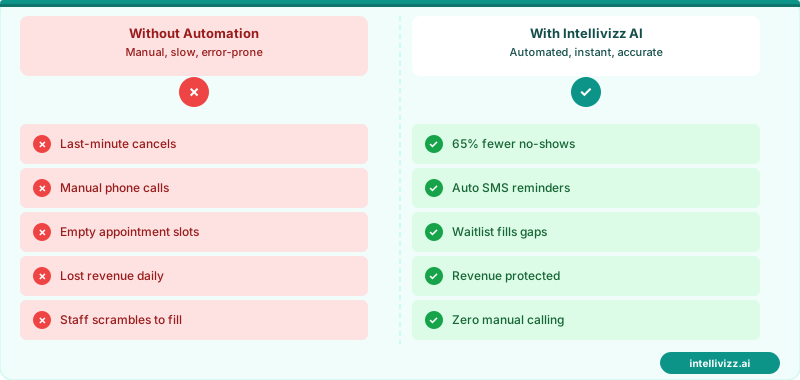
📅 Every missed appointment is a second chance — if you act within hours.
Automated recovery sequences turn no-shows into rescheduled revenue.
Building a Multi-Touch Recovery Sequence
A single follow-up message rarely recovers a no-show. The most effective recovery sequences use three touchpoints across 48 hours: a same-day text (empathetic, low-pressure), a next-morning email (includes a one-click reschedule link), and a 48-hour call from a team member if the first two go unanswered. Each touchpoint serves a different communication preference — some patients prefer text, others respond to email, and some only act when a real voice follows up.
The key is automation handling touchpoints one and two automatically, freeing staff to focus only on the third. With this structure, practices typically recover 35–50% of no-shows without any manual effort on the first two outreach attempts.
What Your Recovery Rate Tells You About Your Practice
No-show recovery rates below 20% almost always point to one of three root causes: messages that feel punitive rather than helpful, reschedule friction that requires a phone call instead of a link, or outreach that happens too late — the next day instead of the same afternoon. Before investing in new technology, audit these three variables. Often the fix is a message rewrite and a scheduling link, not a new platform.
Practices with recovery rates above 40% share a common trait: they treat no-shows as a communication problem, not a patient problem. The patient didn't abandon you — life happened. A warm, frictionless outreach is the fastest path back to the schedule.
| Outreach Timing | Channel | Avg. Recovery Rate |
|---|---|---|
| Same day (within 4 hrs) | SMS | 28–35% |
| Next morning | 12–18% | |
| 48 hours | Phone call | 8–14% |
| 3+ days later | Any | <5% |
For practices looking to reduce no-shows before they happen, see our guide on how to reduce appointment no-shows with proactive reminder systems.
Ready to get started with automation? Explore our AI automation solutions, Appointment Reminder Automation: The Universal Guide..., or Cancellation Backfill Automation: Fill Empty Slots in....