
How Does AI Reduce No-Shows for Doctors? 7 Proven Mechanisms
Patient no-shows cost the U.S. healthcare system an estimated $150 billion annually. For individual practices, the impact is devastating: a single physician losing 3-4 appointments per day to no-shows can forfeit $150,000-$300,000 in annual revenue. AI is changing this equation fundamentally — not through one silver bullet, but through seven distinct mechanisms that work together to reduce no-show rates by 30-50%.
1. Predictive No-Show Scoring
Traditional reminder systems treat every patient the same. AI doesn't. Machine learning models analyze historical data — including past no-show behavior, appointment type, day of week, weather forecasts, distance from the practice, and insurance type — to assign each appointment a no-show probability score.
Patients flagged as high-risk (above 40% probability) receive more aggressive intervention: additional reminder touchpoints, personal phone calls, or even strategic overbooking of their time slot. One study published in the Journal of General Internal Medicine showed predictive models achieved 80%+ accuracy in identifying future no-shows, enabling targeted intervention that reduced no-show rates by 38%.
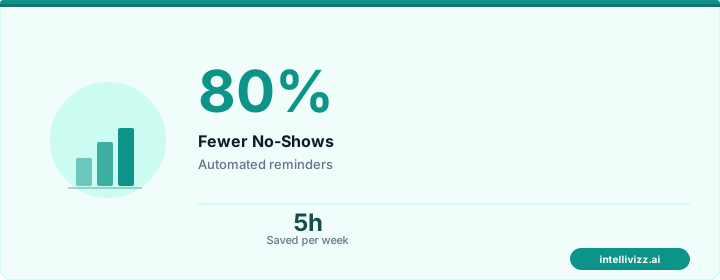
📱 Reduce no-shows by 30-40% with smart reminders
The data speaks for itself
2. Multi-Channel Smart Reminders
AI-powered reminder systems go far beyond a single text message 24 hours before the appointment. They optimize across multiple dimensions:
- Channel preference: Learns whether each patient responds better to SMS, email, phone call, or push notification.
- Timing optimization: Sends reminders at times when the specific patient is most likely to engage (based on past open/response patterns).
- Frequency calibration: High-risk patients get a 7-day, 3-day, 1-day, and same-morning reminder. Low-risk patients get a single 24-hour reminder.
- Content personalization: Includes specific prep instructions, provider name, and parking information to reduce anxiety barriers.
Research from BMC Health Services Research found that optimized multi-channel reminders reduced no-shows by 29% compared to standard single-channel approaches.
3. Intelligent Rescheduling Before the No-Show Happens
One of AI's most powerful capabilities is converting potential no-shows into rescheduled appointments before the slot is lost. When a patient hasn't confirmed despite multiple reminders, the system proactively reaches out with a rescheduling offer:
"Hi Sarah, we notice you haven't confirmed your appointment with Dr. Patel on Thursday at 2:00 PM. Would you like to reschedule? Reply 1 to keep, 2 to reschedule, or 3 to cancel."
Approximately 35% of patients who would have been no-shows will respond and either confirm or reschedule when given this proactive option. That's a third of your no-shows recovered before they even happen.
4. Automated Waitlist Backfilling
When a cancellation or predicted no-show opens a slot, AI instantly activates the waitlist. Patients who previously requested earlier appointments receive an automated offer: "Good news! An earlier appointment has opened with Dr. Martinez on Wednesday at 10:00 AM. Would you like to switch from your Friday slot? Reply YES to confirm."
This automated cancellation backfill system recovers 40-60% of cancelled slots within 2 hours — revenue that would otherwise be completely lost. No staff phone calls, no waiting, no empty chair.
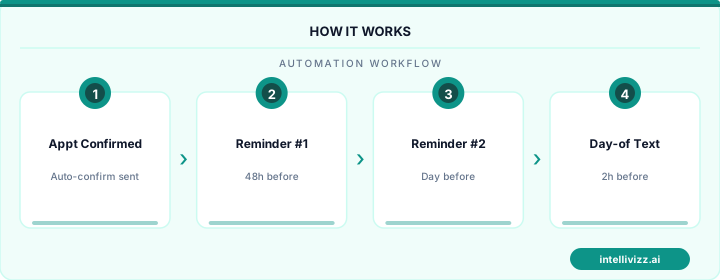
📱 Reduce no-shows by 30-40% with smart reminders
Smart technology, better results
5. Barrier Identification and Removal
AI conversational systems can identify and address common barriers to attendance during reminder interactions:
- Transportation: If a patient mentions difficulty getting to the appointment, the system can offer telehealth alternatives or connect them with ride-share programs.
- Financial concerns: Patients worried about cost can be routed to financial counselors or informed about payment plan options before they silently skip the appointment.
- Anxiety: For dental or procedural appointments, the system can provide pre-appointment comfort information and what-to-expect guides.
- Scheduling conflicts: The AI can offer same-day rescheduling to a more convenient time rather than losing the visit entirely.
6. Strategic Overbooking
AI takes the guesswork out of overbooking by using historical no-show patterns and real-time predictive scores to recommend optimal daily overbooking levels. Rather than blanket overbooking (which leads to frustrated patients when everyone shows up), AI recommends overbooking only specific slots based on the risk profile of scheduled patients.
For example, if three patients in the 2:00-4:00 PM block have no-show scores above 50%, the system might recommend scheduling one additional patient in that window. If all patients in the 9:00-11:00 AM block have low no-show risk, no overbooking is applied.
7. Post-No-Show Recovery Automation
When a no-show does occur, AI immediately initiates a recovery sequence:
- 15 minutes post-missed-appointment: "We missed you at your appointment today. We hope everything is okay. Would you like to reschedule? Reply YES or call us at [phone]."
- 24 hours later: If no response, a follow-up with available times for the same week.
- 1 week later: A final outreach with a broader range of scheduling options.
This automated no-show recovery sequence recaptures 25-40% of patients who would otherwise be lost to follow-up.
Putting It All Together: Expected Impact
When all seven mechanisms work in concert, practices typically see these results within the first 90 days:
- No-show rates drop from 18-25% to 8-12% (a 40-55% reduction)
- Cancelled slots are backfilled at 40-60% rate
- Patient satisfaction scores improve 15-20% (due to better communication)
- Staff phone time decreases by 2-3 hours per day
- Net revenue recovery of $10,000-$30,000 per month per provider
The practices seeing the best results combine AI automation with AI-powered phone handling that catches scheduling issues during the initial booking call itself — preventing downstream no-show triggers from the start.
Ready to see how AI can reduce no-shows at your practice? Book a free consultation to get a customized analysis based on your current no-show rate and patient volume.
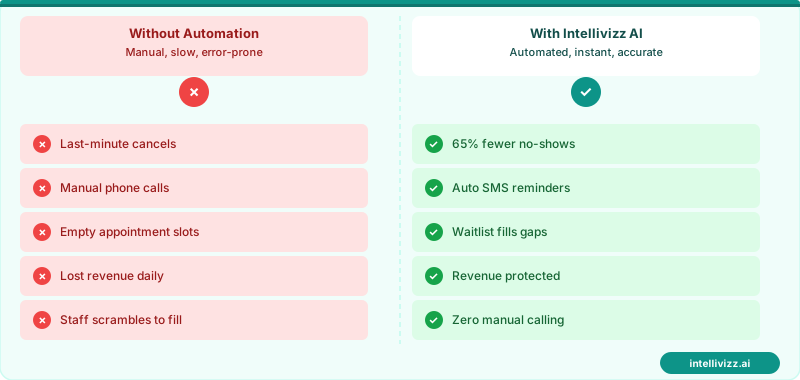
🩺 AI doesn't replace the patient relationship — it protects the time you need to deliver it.
AI-powered reminder systems cut medical no-shows by 30–50% with zero staff effort.
AI vs. Traditional Reminder Systems: What's Actually Different
Traditional appointment reminder systems send the same message to every patient at the same time before every appointment. AI-powered systems do something fundamentally different: they adapt. They learn which patients respond to SMS vs. email, which time of day each patient is most likely to engage with a message, and which patients have a history of no-showing and therefore need additional touchpoints. Over time, the system's effectiveness compounds as it builds a behavioral profile for each patient.
This personalization isn't cosmetic. Practices that have switched from static reminder systems to adaptive AI-driven systems report a 12–18 percentage point improvement in no-show reduction — on top of the baseline reduction from having a reminder system at all. For a practice with 30 no-shows per month, that's 4–5 additional recovered appointments per month, compounding every month thereafter.
Implementing AI No-Show Prevention: A Practical Roadmap
For physicians and practice managers evaluating AI no-show prevention, the implementation path is more straightforward than it might appear. Most modern practice management systems (Athenahealth, Epic, Kareo, DrChrono) have native integrations or open APIs that allow AI reminder platforms to pull appointment data and send automated outreach without manual data entry. The typical integration takes 2–4 weeks from contract to first automated message.
| Implementation Phase | Timeline | Key Milestone |
|---|---|---|
| Platform selection | Week 1 | Evaluate 2–3 options, confirm EHR integration |
| Integration setup | Weeks 2–3 | API connection, test data sync, HIPAA BAA signed |
| Message configuration | Week 3 | Reminder templates, timing rules, escalation logic |
| Launch & baseline | Week 4 | Go live, track no-show rate for 30-day baseline |
Once no-shows are reduced, a well-structured no-show recovery automation sequence handles the appointments that still fall through.
Ready to modernize your practice? Explore our healthcare automation solutions, How to Reduce No-Shows in Your Medical Practice:..., or Patient Appointment Reminder Automation: The Complete....