
How Bethesda, MD Dermatology Practices Are Cutting No-Shows by 40% with Automation
The No-Show Crisis in Dermatology
Dermatology practices consistently rank among the highest no-show specialties in medicine. National data shows dermatology no-show rates averaging 20-30%, significantly higher than the 18% average across all specialties. For Bethesda, MD practices — where appointment wait times already stretch 4-8 weeks — every missed slot represents both lost revenue and a patient who could have been seen.
A typical Bethesda dermatology practice with 3 providers sees roughly 60-80 patients daily. At a 25% no-show rate, that's 15-20 empty slots per day, or approximately $4,500-$7,500 in daily lost revenue based on average dermatology reimbursement rates.
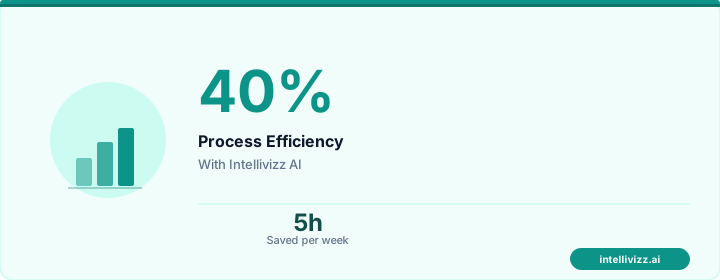
📱 Reduce no-shows by 30-40% with smart reminders
The data speaks for itself
Why Dermatology Has Higher No-Show Rates
Several factors make dermatology particularly susceptible to no-shows:
- Long wait times for appointments — Patients book 6-8 weeks out and forget or find another provider
- Cosmetic vs medical urgency — Elective procedures feel less urgent as the appointment date approaches
- Condition improvement — Skin conditions may improve between booking and appointment, reducing perceived need
- Insurance complexity — Patients discover coverage issues and cancel mentally but not formally
- Bethesda-specific factors — High-income professionals with busy schedules, government workers with unpredictable meeting demands, traffic congestion on the I-270/495 corridor
The Multi-Channel Reminder Strategy
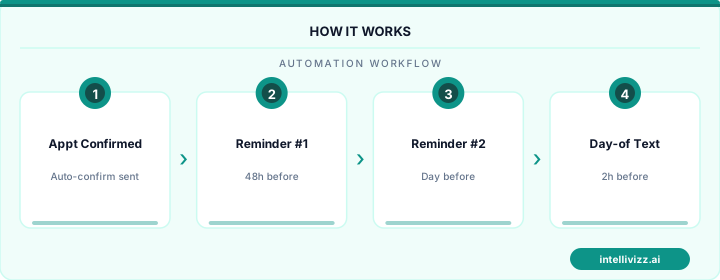
The most effective no-show reduction approach combines multiple touchpoints across different channels. Here's the protocol that Bethesda-area dermatology practices are implementing:
14 Days Before: Confirmation Request
An automated text or email asks the patient to confirm their appointment. This early touchpoint catches patients who already know they can't make it, freeing the slot for the waitlist.
3 Days Before: Detailed Reminder
A reminder with specific preparation instructions (no retinol for 48 hours before a chemical peel, wear loose clothing for a body exam) reinforces the appointment's importance and gives patients a reason to engage.
Day-Of Morning: Final Reminder
A brief text with the appointment time, provider name, and office address (with a Google Maps link for new patients). Include a one-tap reschedule option for patients who suddenly can't make it.
15 Minutes Post No-Show: Recovery Outreach
An automated message sent to patients who didn't arrive: "We missed you today. Would you like to reschedule?" This cancellation recovery approach recaptures 20-30% of no-shows into rescheduled appointments.
Smart Scheduling Tactics
Beyond reminders, Bethesda practices are restructuring how they schedule to minimize no-show impact:
Overbooking with Data
Rather than blanket overbooking (which creates chaos when everyone shows up), AI-powered scheduling analyzes each patient's historical no-show probability and adjusts the schedule accordingly. A patient who has missed 3 of their last 5 appointments gets double-booked; a patient with 100% attendance doesn't.
Waitlist Automation
When a cancellation or no-show occurs, an automated system immediately texts patients on the waitlist in priority order. The first to confirm gets the slot. This turns a revenue loss into a neutral event — or even a positive one, since waitlisted patients tend to be highly motivated and compliant.
Strategic Deposit Requirements
For cosmetic procedures (Botox, fillers, laser treatments), requiring a modest deposit ($25-$50) at booking reduces no-shows by 45-60%. Bethesda patients generally accept this practice when it's positioned as a "reservation fee" that applies to the cost of treatment.
📱 Reduce no-shows by 30-40% with smart reminders
Smart technology, better results
Results from Local Practices
Dermatology practices in the Bethesda-Rockville-Silver Spring corridor implementing these strategies report consistent improvements:
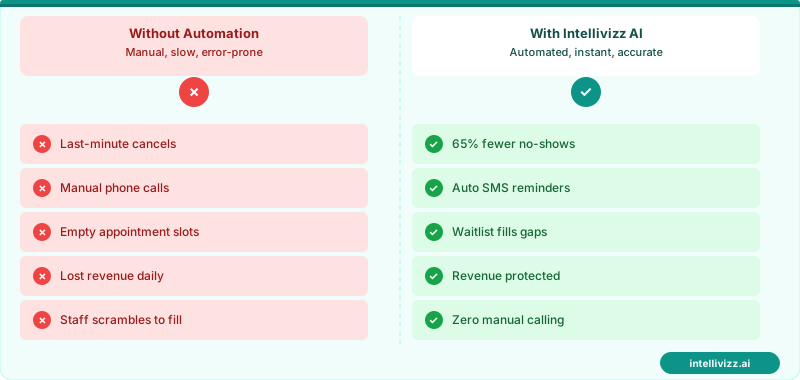
- No-show rates dropping from 25-30% to 12-15% within 90 days
- Same-day cancellations (the hidden no-show) decreasing 35%
- Waitlist fill rates improving from 10% to 45% of cancelled slots
- Annual revenue recovery of $120,000-$180,000 per provider
- Patient satisfaction scores increasing as wait times for new appointments shorten
Technology Stack for No-Show Reduction
The most effective Bethesda practices combine several tools:
- AI receptionist — Handles inbound calls and scheduling with instant appointment confirmations
- Automated reminder platform — Multi-channel (SMS, email, voice) with smart timing based on patient preferences
- Predictive analytics — Machine learning models that flag high-risk appointments for proactive outreach
- Waitlist management — Automated backfill system that contacts waitlisted patients within minutes of a cancellation
- Patient portal — Self-service rescheduling that removes friction from the change process
The total investment typically runs $500-$1,200/month — a fraction of the revenue recovered from reduced no-shows. Practices in the Silver Spring and greater Montgomery County area have seen particularly strong adoption rates among patients comfortable with digital communication.
Frequently Asked Questions
How quickly do no-show rates improve after implementing automation?
Most practices see measurable improvement within 30 days, with full optimization reached at 60-90 days as the system learns patient preferences and response patterns.
Do automated reminders annoy patients?
When patients can choose their preferred channel (text, email, or phone) and frequency, satisfaction with reminders exceeds 85%. The key is offering easy opt-out and customization.
Should I charge no-show fees instead?
No-show fees recover pennies on the dollar and damage patient relationships. Prevention through automation is both more profitable and better for retention. Reserve fees for repeat offenders only.
🏥 Bethesda patients expect a premium experience — your reminders should match.
Specialty-specific no-show reduction that fits the Bethesda market.
Why Dermatology No-Shows Are Uniquely Costly
Dermatology appointments carry costs that other specialties don't. Procedure rooms are prepared, equipment is sterilized, and exam time is blocked for a specific treatment type — not interchangeable with a general exam. When a Mohs surgery patient no-shows, that slot can't be filled last-minute with a routine acne consultation. The operational disruption ripples through the entire day's schedule, and the revenue loss is compounded by the preparation cost already incurred.
For Bethesda-area practices, the economics are particularly sharp. Average dermatology procedure values in Montgomery County range from $285 (consultation) to $1,800+ (laser resurfacing, cosmetic procedures). A single cosmetic procedure no-show on a Friday afternoon can represent $1,500+ in unrecoverable revenue for that week.
Building a Reminder Cadence for Bethesda Patients
High-income suburban markets like Bethesda respond differently to appointment reminders than other demographics. Overly casual or generic messages perform poorly. What works: professional tone, specific appointment details (time, provider name, preparation instructions if applicable), and a clear one-tap confirmation mechanism. Practices that add a "confirm your appointment" CTA to their reminders reduce no-shows by an additional 15–20% compared to reminders that are informational only.
Recommended cadence for Bethesda dermatology: 7-day email (prep instructions + confirm link), 48-hour SMS (confirm/cancel link), 4-hour SMS (day-of reminder with parking details).
| Reminder Type | Timing | No-Show Reduction |
|---|---|---|
| Email with prep instructions | 7 days prior | 10–14% |
| SMS with confirm/cancel | 48 hours prior | 22–28% |
| Day-of SMS reminder | 4 hours prior | 8–12% |
For a broader look at the evidence-based strategies behind these results, see our guide on how to reduce appointment no-shows across specialties.
Ready to get started with automation? Explore our AI automation solutions, or read our guide to How to Reduce No-Shows in Your Medical Practice:....