
Dental Practice Reputation Management: A Complete Guide to Protecting and Growing Your Online Presence
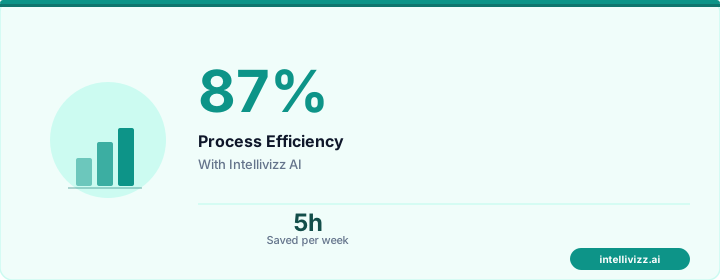
Your dental practice's online reputation is now the single most important factor in new patient acquisition. According to a 2025 BrightLocal survey, 87% of consumers read online reviews for local businesses — and healthcare practices receive even more scrutiny. A single unaddressed negative review can cost your practice 30 potential patients over the course of a year.
Reputation management isn't just about damage control. It's a proactive strategy that consistently generates positive reviews, addresses concerns quickly, and builds a digital presence that converts browsers into booked appointments.
Why Reputation Matters More for Dentists
Dental anxiety affects an estimated 36% of the population, with 12% experiencing extreme dental fear. This means prospective patients are already nervous before they ever search for a dentist. They're looking for reassurance — and online reviews provide exactly that.
When a patient searches "dentist near me," Google displays a local 3-pack with star ratings front and center. Practices with 4.7+ stars and 100+ reviews dominate click-through rates. If your practice has a 3.8-star rating or fewer than 20 reviews, you're invisible to the patients who matter most.
⭐ Your online reputation is your #1 marketing asset
The data speaks for itself
The Five Pillars of Dental Reputation Management
1. Systematic Review Generation
The most common mistake practices make is leaving reviews to chance. If you only get reviews from patients who feel strongly — either positively or negatively — your rating will be volatile and unrepresentative. The solution is a systematic approach that asks every satisfied patient for a review.
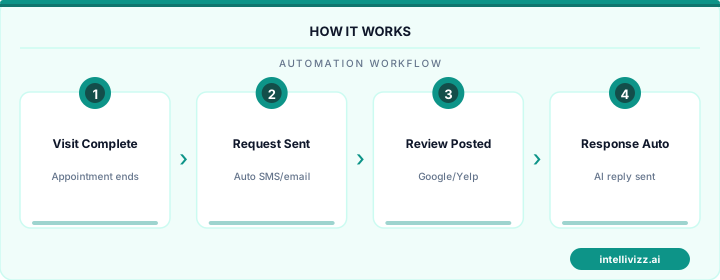
Automated review request systems send a text or email within 1-2 hours of the appointment. The message includes a direct link to your Google Business Profile review page, reducing friction from 5 steps to 1 tap. Practices using automated requests see review volume increase 300-500% within the first quarter.
For dental practices specifically, timing is critical: send the request after a routine cleaning or cosmetic procedure when satisfaction is highest. For complex procedures (root canals, extractions), wait 24-48 hours to let any post-procedure discomfort subside before asking.
2. Review Response Protocol
Responding to every review — positive and negative — signals to Google and to future patients that you're engaged and care about feedback. Your response protocol should include:
- Positive reviews: Thank the patient by name (if HIPAA-compliant — never reference specific treatments), respond within 24 hours, and mention something specific from their experience if possible.
- Negative reviews: Respond within 4 hours. Acknowledge the concern without being defensive. Move the conversation offline: "We take your experience seriously. Please contact our office manager at [email] so we can address this directly." Never reference clinical details publicly.
- Fake reviews: Flag through Google's reporting tool, then leave a professional response: "We don't have a record of this experience at our practice. Please contact us directly so we can investigate."
3. Patient Experience Optimization
The best reputation management strategy is delivering exceptional experiences. Common dental practice experience gaps that trigger negative reviews include: long wait times beyond the scheduled appointment, unexpected costs not discussed during treatment planning, front desk communication breakdowns, and difficulty reaching the office by phone.
An AI receptionist for your dental office can address the phone accessibility gap entirely — ensuring every patient call is answered, even after hours, and basic questions about insurance, hours, and appointment availability are handled instantly.
4. Online Presence Management
Your reputation extends beyond Google Reviews. Manage your presence across all platforms where patients might find you:
- Google Business Profile: Keep hours, photos, services, and Q&A updated weekly.
- Healthgrades & Zocdoc: Claim your profile, update provider information, respond to reviews.
- Yelp: Claim your business page, add photos, and respond to reviews (but never solicit Yelp reviews — it violates their terms).
- Facebook: Enable recommendations, post regularly, and respond to messages promptly.
5. Reputation Monitoring and Analytics
Track your reputation metrics monthly: average star rating across platforms, review volume trend, response time to negative reviews, sentiment analysis of review themes, and competitor comparison. Tools like AI-powered review monitoring can automate this tracking and alert you to new reviews in real-time so nothing falls through the cracks.
Handling a Reputation Crisis
If your practice experiences a sudden influx of negative reviews — whether from a genuine service issue or a coordinated attack — act quickly:
- Assess the situation: Are the reviews from verified patients? Is there a legitimate pattern of complaints?
- Respond to each review individually with empathy and a path to resolution.
- Activate your review generation system to increase the volume of positive reviews from genuine patients.
- Address the root cause internally — whether it's a staffing issue, a process breakdown, or a communication gap.
- Document everything in case you need to report fraudulent reviews to Google.
HIPAA Considerations in Review Management
Dental practices face unique constraints when responding to reviews. HIPAA prohibits disclosing any protected health information (PHI) — and this includes confirming that someone is a patient. Your review responses should never:
- Confirm the reviewer's patient status
- Reference specific treatments, diagnoses, or procedures
- Share dates of service or appointment details
- Discuss insurance claims or billing specifics
Instead, keep responses general: "We strive to provide excellent care for everyone who visits our practice. We'd love the opportunity to discuss your concerns privately." A HIPAA-compliant AI system can help automate review responses that stay within these boundaries.
⭐ Your online reputation is your #1 marketing asset
Smart technology, better results
Building a Long-Term Reputation Strategy
Reputation management is not a one-time project — it's an ongoing operational practice. It's one piece of a broader automation strategy — for the full picture, see our guide to the best AI automation for dental offices. The most successful dental practices treat reputation the same way they treat clinical quality: with consistent attention, measurement, and improvement. Start with automated review generation, build a response protocol, and layer in monitoring and analytics over time. Within 6 months, you'll see measurable improvements in both your online presence and new patient acquisition.
Crisis Communication Playbook for Dental Practices
Even well-run dental practices face reputation crises — a viral negative review, a patient complaint on social media, or an unfavorable news mention. Having a documented crisis playbook ensures your team responds quickly, consistently, and in a way that protects your practice's reputation. Here is how to prepare.
Viral Negative Review Containment
When a negative review gains unusual traction — shared on social media, screenshot circulated, or picked up by a local news outlet — your response window shrinks from 48 hours to 2-4 hours. Designate a single spokesperson, typically the practice owner or office manager, who has authority to respond publicly. Acknowledge the concern without admitting fault, express genuine empathy, and invite the reviewer to continue the conversation privately. Never argue publicly, delete legitimate reviews, or respond with sarcasm, even if the review contains inaccuracies. Post your response and then monitor the thread every hour for 72 hours, responding to follow-up comments promptly to demonstrate active engagement.
Media Inquiry Response Protocols
If a local reporter contacts your practice about a patient complaint or review controversy, do not improvise. Have a prepared holding statement: "We take every patient concern seriously and are reviewing this matter. Patient privacy regulations prevent us from discussing specific cases publicly." This buys time without appearing evasive. Within four hours, consult with your practice's attorney or dental board advisor before making any substantive comment. Train front-desk staff to route all media calls to a designated contact rather than offering impromptu opinions that could be quoted out of context. Documentation of all media interactions protects you legally and ensures message consistency.
Pairing your crisis protocols with a structured negative review recovery strategy ensures you have both reactive and proactive systems in place to handle reputation threats at any scale.
Proactive Reputation Building Through Community Engagement
The strongest defense against reputation crises is a deep reservoir of community goodwill built before any crisis occurs. Sponsor local youth sports teams, offer free dental screenings at community health fairs, and partner with schools for oral health education programs. Document these activities on your website and social media, creating a public record of community investment that provides context if a negative incident occurs. Practices with strong community ties weather reputation storms more effectively because the community's default assumption is positive — one bad review feels like an anomaly rather than a pattern.
For more on protecting your practice's reputation, explore our guide on responding to negative reviews in healthcare or learn about negative review recovery strategies.
Ready to modernize your practice? Explore our healthcare automation solutions, Dental Practice Marketing Automation: Attract,..., or Automated Review Requests for Medical Practices: The....