
AI Patient Follow-Up Automation: Close the Loop on Every Patient Interaction
Patient follow-up is one of the most impactful — and most neglected — aspects of medical practice operations. Studies show that practices with systematic follow-up protocols see 25-35% better treatment adherence, 40% higher patient retention, and significantly fewer malpractice claims. Yet most practices rely on staff to remember, sticky notes, and best intentions — a system designed to fail.
AI patient follow-up automation ensures every patient receives appropriate post-visit communication, every care gap is identified and addressed, and every opportunity for engagement is captured — without adding hours of administrative work to your team's day.
The Follow-Up Gap
When follow-up is manual, the numbers are grim: only 20-30% of patients who need post-procedure check-ins actually receive them, referral completion rates average 50-60% (meaning 40-50% of referred patients never see the specialist), preventive care recall (annual physicals, screenings, immunizations) has a 30-40% response rate at best, and chronic disease management check-ins happen sporadically rather than systematically.
Each gap represents a clinical risk (delayed care, missed diagnoses) and a business risk (lost revenue, patient attrition, potential liability).
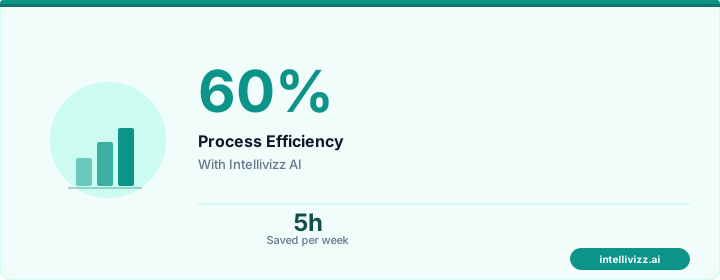
🏥 Patients expect instant responses — automation delivers
Smart technology, better results
Types of Automated Patient Follow-Up
Post-Visit Check-Ins
Automated messages 24-48 hours after a visit show patients their practice cares and catch potential complications early:
- Post-procedure: "Hi [Name], this is [Practice]. How are you feeling after your [procedure] yesterday? Any unexpected pain, swelling, or concerns? Reply here or call us at [phone]."
- New medication: "You started [medication] at your visit. Are you experiencing any side effects? We want to make sure everything is going smoothly."
- Post-diagnosis: "We wanted to check in after your visit with Dr. [Name]. Do you have any questions about your diagnosis or treatment plan? We're here to help."
These check-ins serve dual purposes: clinical safety monitoring and patient satisfaction improvement. Patients who receive follow-up check-ins rate their experience 20% higher than those who don't.
Treatment Adherence Monitoring
For patients on treatment plans, AI automation tracks compliance milestones: medication refill reminders (coordinated with pharmacy data when available), physical therapy or follow-up appointment reminders, lab work scheduling (e.g., "Your 3-month A1C test is due — schedule your lab visit here"), and lifestyle modification check-ins ("How is the exercise plan going? Your next visit with Dr. Chen is in 2 weeks.").
Referral Follow-Through
When a provider refers a patient to a specialist, AI tracks whether the referral is completed: immediate referral notification to the patient with the specialist's contact information and scheduling link, a 7-day follow-up if the patient hasn't scheduled ("Have you been able to schedule your appointment with Dr. [Specialist]? We can help if you need assistance."), and a 30-day escalation to the referring provider if the referral remains incomplete.
This automated referral tracking increases completion rates from 50-60% to 80-90% — ensuring patients get the specialist care they need.
Preventive Care Recall
AI recall campaigns automatically identify and reach out to patients due for: annual wellness exams, age-specific screenings (colonoscopy, mammography, bone density), immunizations (flu shot, pneumonia, shingles), chronic disease management visits (diabetes, hypertension quarterly checks), and vision and hearing screenings.
The system sends graduated outreach: an initial notification with a scheduling link, a reminder at 2 weeks, a phone call attempt at 30 days, and a final outreach at 60 days before marking the patient as non-responsive. Practices using automated recall see 60-70% of due patients scheduled within 30 days of the initial outreach.
Patient Satisfaction and Feedback
Post-visit satisfaction surveys identify experience issues before they become negative reviews: a brief 2-3 question survey sent 24 hours after the visit, automatic routing of negative feedback to the practice manager for intervention, positive feedback channeled to Google review requests, and trend analysis identifying systemic issues (wait times, communication, billing).
Building Your Follow-Up Automation Stack
An effective follow-up system requires: EHR integration (to know which patients need which follow-up), two-way messaging platform (SMS, email, or both), workflow engine to define follow-up rules by visit type, response monitoring to track engagement and escalate non-responders, and a reporting dashboard showing follow-up compliance rates.
The AI-powered healthcare communication platform from Intellivizz integrates all these capabilities into a single system — connecting follow-up automation with phone handling, scheduling, and patient engagement.
Measuring Follow-Up Effectiveness
Track these metrics: post-visit contact rate (target: 100% of qualifying visits), patient response rate to follow-up (target: 60-70%), referral completion rate (target: 80%+), preventive care recall scheduling rate (target: 60% within 30 days), patient satisfaction scores (compare follow-up vs. non-follow-up cohorts), and revenue impact from increased visit volume and improved retention.
The practices that systematize follow-up don't just deliver better care — they build stronger patient relationships that translate to higher retention, more referrals, and sustainable growth.
Ready to close the follow-up loop at your practice? Book a free consultation to see how AI-powered follow-up automation works with your existing systems.
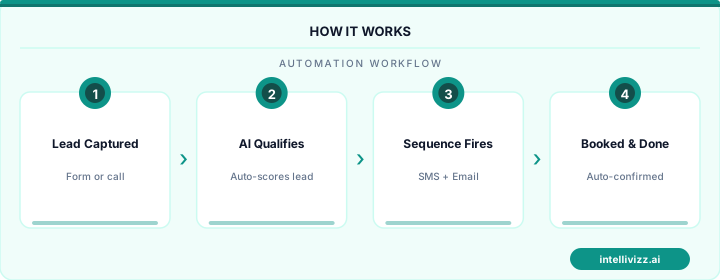
🏥 Patients expect instant responses — automation delivers
The data speaks for itself
Post-Procedure Follow-Up: Clinical Safety and Patient Experience
Automated patient follow-up after procedures and surgeries serves a dual clinical and administrative purpose that makes it one of the most impactful automation investments in clinical practice. From a clinical safety standpoint, the 48–72 hour post-procedure window is when the majority of complications present — wound site concerns, adverse medication reactions, pain management failure, and post-anesthesia symptoms in surgical contexts. A practice that does not have a systematic post-procedure check-in protocol is relying on patients to self-identify and report these concerns, which consistently results in delayed presentation of complications, worse clinical outcomes, and increased liability exposure. Automated follow-up that reaches out to every post-procedure patient with a structured symptom check — in a conversational format that patients are more likely to engage with than a paper form — transforms the post-procedure safety protocol from aspirational to actual.
From a patient experience perspective, the post-procedure follow-up is among the most powerful drivers of patient satisfaction scores. Patients who receive a genuine, timely post-procedure check-in — even an automated one that is clearly branded as such — rate their overall care experience significantly higher than patients who receive no post-procedure contact. The reasoning is straightforward: the follow-up communicates that the clinical team cares about outcomes beyond the appointment, not just the procedure revenue. For surgical and interventional practices where patient satisfaction scores are tied to payer contracts and value-based care arrangements, systematic post-procedure follow-up automation directly affects financial performance in addition to clinical quality metrics.
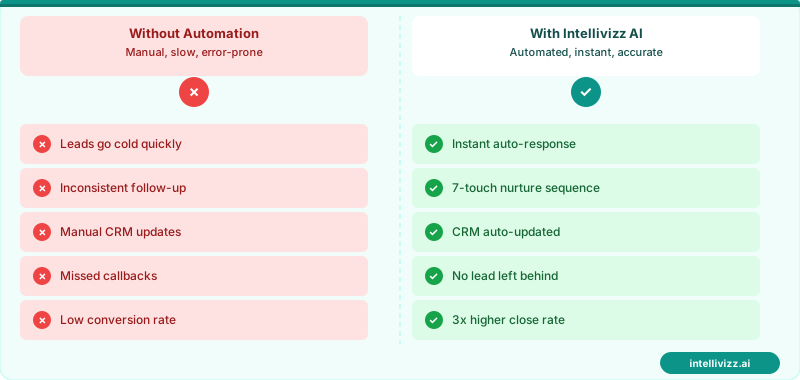
🏥 Post-Procedure Follow-Up Is a Clinical Safety Protocol, Not an Admin Task
Automated check-ins reach 100% of post-procedure patients — manual systems reach 30–50%
Chronic Disease Management and Longitudinal Follow-Up Automation
Chronic disease management presents a follow-up automation challenge that differs fundamentally from acute or episodic care. Patients with diabetes, hypertension, heart failure, COPD, and other chronic conditions require longitudinal engagement that spans months and years — not a single post-visit check-in. The clinical goals of chronic disease follow-up automation are medication adherence monitoring, early detection of symptom worsening that merits clinical review, support for lifestyle modification goals (weight, activity, dietary targets), and maintenance of engagement between clinic visits that prevents the care discontinuity associated with worse chronic disease outcomes.
AI-powered chronic disease follow-up sequences use structured, validated patient-reported outcome measures delivered via SMS or patient portal: a weekly PHQ-2 for depression management patients, a biweekly blood pressure log submission for hypertension patients, a monthly A1c tracking prompt for diabetes patients whose home monitoring data can be entered and trended over time. The system flags responses that indicate clinical deterioration — a PHQ-2 score that has risen two points over three consecutive weeks, a blood pressure log average that has exceeded 140/90 for 14 consecutive days, a reported A1c value above the patient's target — and routes an alert to the managing clinician for proactive outreach. This surveillance function, conducted at the population level across all chronic disease patients in the panel, is simply not achievable through manual follow-up at the patient volumes of a modern primary care practice.
| Follow-Up Type | Automation Trigger | Clinical Metric Tracked | Escalation Threshold |
|---|---|---|---|
| Post-procedure (48hr) | 48 hours after discharge | Pain, wound, medication tolerance | Any symptom concern flagged |
| Chronic disease (weekly/biweekly) | Scheduled recurring sequence | PRO measures, self-reported values | Validated threshold deterioration |
| Medication adherence | Refill due date minus 7 days | Refill completion | Missed refill after 3-day window |
| Care plan milestone | 30/60/90 day plan checkpoints | Goal completion, barrier identification | Less than 50% milestone progress |
Practices implementing comprehensive patient follow-up automation as part of a value-based care strategy will find the annual wellness and preventive care framework in annual wellness recall automation directly complementary — covering the proactive outreach that brings chronic disease patients in for the preventive visits where long-term disease management goals and care plan adjustments are addressed in a face-to-face clinical encounter.
Mental Health and Behavioral Health Follow-Up: Special Considerations
Patient follow-up automation in mental health and behavioral health settings requires specific design considerations that differ meaningfully from physical health contexts. Post-appointment check-ins for patients receiving treatment for depression, anxiety, substance use disorders, or trauma-related conditions must be designed with clinical safety protocols that recognize the difference between a patient who reports "feeling better" and one who expresses hopelessness, suicidal ideation, or crisis-level distress. Automated follow-up in behavioral health settings must include validated screening instruments (PHQ-2, GAD-2, Columbia Suicide Severity Rating Scale) embedded in the check-in sequence, with automatic escalation pathways that route concerning responses immediately to the treating clinician or crisis line — not to a generic administrative follow-up queue.
Privacy in behavioral health follow-up automation deserves particular attention. Patients receiving mental health treatment have specific sensitivity concerns about who sees their appointment history, follow-up messages, and symptom check-in responses — concerns that are legally recognized in the specific privacy protections that apply to mental health records under HIPAA (42 CFR Part 2 for substance use treatment, additional state-level mental health record protections in many jurisdictions). Automated follow-up messages that appear in a patient's SMS inbox where a family member might see them, or that include diagnostic or appointment type information that reveals the nature of treatment, create real harm potential that standard medical follow-up automation does not. Behavioral health practices implementing automated follow-up must configure their platforms specifically for these privacy requirements — using general rather than diagnosis-specific language, providing opt-out and privacy preference controls, and ensuring that no treatment-specific information appears in notification previews or SMS metadata.
Ready to modernize your practice? Explore our healthcare automation solutions, AI Automation for Medical Practice: A Practical..., or Patient Recall System for Healthcare: How to Keep....