
How to Get More Patient Referrals: 10 Strategies That Build a Self-Sustaining Referral Engine
Patient referrals are the highest-converting, lowest-cost source of new patients for any medical or dental practice. Referred patients have a 37% higher lifetime value, 25% higher retention rate, and cost virtually nothing to acquire compared to digital advertising. Yet most practices have no systematic referral strategy — they simply hope satisfied patients mention them to friends.
Hope is not a strategy. This guide presents 10 actionable approaches to building a referral engine that generates a predictable flow of new patients from both patient-to-patient and physician-to-physician referrals.
Part 1: Patient-to-Patient Referral Strategies
Strategy 1: The Post-Visit Referral Ask
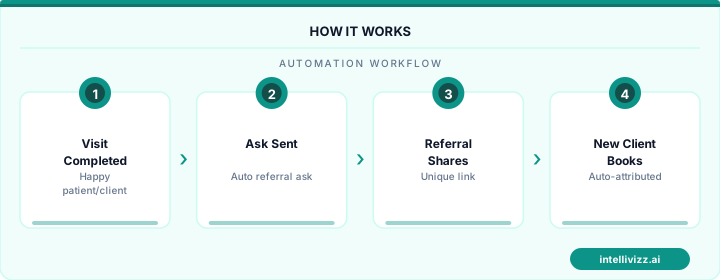
The simplest and most overlooked strategy: ask. After a positive appointment, have the provider or staff say: "We're always happy to welcome friends and family. If you know anyone looking for a [specialty], we'd be honored to care for them too."
This works because patients don't think to refer — not because they don't want to. A gentle prompt at the right moment plants the seed. Follow it with an automated text 24 hours later: "Thanks for visiting today! If you know someone who could benefit from our care, here's an easy way to share: [referral link]."
Strategy 2: Formalized Referral Program
Create a structured referral program with clear communication. This doesn't mean financial incentives (which create ethical issues in healthcare) — it means making the referral process easy and visible.
Elements of an effective referral program:
- Dedicated referral landing page on your website
- Simple referral cards (physical and digital) patients can share
- Thank-you acknowledgment when a referral schedules (handwritten note or small gift like a branded water bottle)
- Tracking system to measure referral sources and thank referrers
Strategy 3: Google Review Amplification
Your Google reviews function as passive referrals — every positive review is a recommendation to thousands of potential patients. Practices with 100+ reviews generate significantly more organic referral traffic because prospective patients trust peer feedback.
Pair your referral strategy with automated review generation to amplify your referral reach beyond your patients' immediate social circles.
Strategy 4: Patient Milestone Celebrations
Celebrate treatment milestones — braces removal, successful surgery recovery, a year of managed chronic conditions — and encourage patients to share their journey. "You've come so far! If you want to share your experience to help others in a similar situation, we'd love that."
Milestone moments produce the most passionate and detailed referrals because patients have tangible results to share.
Strategy 5: Community Involvement
Sponsor local events, participate in health fairs, and host community education seminars. These activities put your practice in front of potential patients in a non-sales context, building awareness and trust that translates to referrals.
🏥 Patients expect instant responses — automation delivers
See how automation transforms industry operations
Part 2: Physician-to-Physician Referral Strategies
Strategy 6: Referral Relationship Mapping
Identify every physician and healthcare provider in your area who treats patients that could benefit from your specialty. Map the relationship: who do they currently refer to? What would make them refer to you instead?
Build a prioritized list and schedule introductory meetings with the top 20 referral sources. Bring your credentials, your outcomes data, and a clear message about why their patients will have a good experience with you.
Strategy 7: Referral Communication Excellence
The #1 complaint referring physicians have: they never hear what happened to the patient they sent. Close this loop religiously.
After every referred patient visit, send a consultation report within 48 hours. Include findings, treatment plan, and next steps. This simple act of communication makes referring physicians feel valued and confident in continuing to send patients your way.
Strategy 8: Make Referring Easy
Remove friction from the physician referral process. Provide a simple referral form (online and fax), a dedicated referral coordinator phone number, and same-week availability for referred patients. The easier you make it, the more referrals you'll receive.
Strategy 9: Quarterly Referral Source Updates
Send quarterly updates to your top referral sources: new services offered, providers added, outcomes highlights, and a personal thank-you. This keeps your practice top-of-mind and demonstrates that you value the relationship.
Strategy 10: Automated Referral Tracking
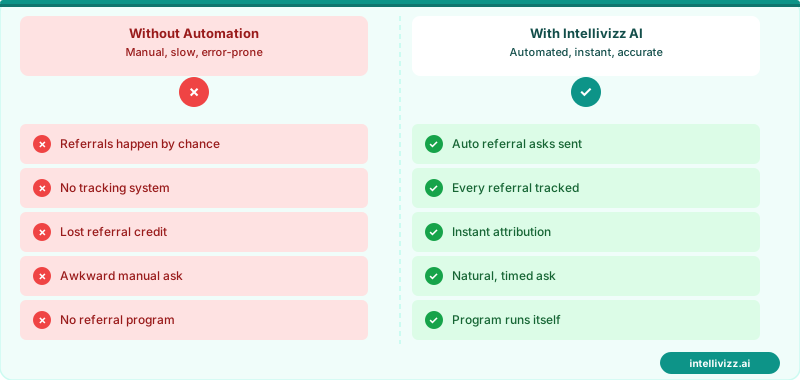
Implement a system to track every referral from source to outcome. Know which physicians, patients, and channels generate the most referrals — and double down on what's working.
Your practice management system should tag each new patient with their referral source. Run monthly reports showing referral volume by source, conversion rate, and revenue generated. This data drives strategic decisions about where to invest your referral-building efforts.
Measuring Your Referral Engine
- Referral rate: New patients from referrals / total new patients (target: 40-60%)
- Referral source concentration: Are you too dependent on one source? Diversify.
- Time to schedule: How quickly do referred patients get an appointment? (Faster = more referrals)
- Referral loop closure: What % of referring physicians receive a consultation report within 48 hours?
- Net Promoter Score: Track patient willingness to refer (NPS > 70 = strong referral potential)
A systematic referral program is the highest-ROI growth initiative available to medical and dental practices. Every dollar invested in making referrals easy and rewarding compounds over time — creating a self-sustaining growth engine that reduces your dependence on expensive advertising.
🏥 Patients expect instant responses — automation delivers
From manual processes to automated excellence
🤝 Your best patients already trust you. They just need a reason to talk about you.
Systematized referral programs turn happy patients into a reliable growth engine.
The Timing Problem Most Practices Get Wrong
Most referral requests happen at check-out — after the patient has already mentally shifted from "healthcare mode" to "next errand on my list" mode. The cognitive overhead of committing to a referral in that context is high, so most patients nod politely and do nothing. The optimal moment to ask for a referral is immediately after a positive clinical experience, while the patient is still in the building and the emotional peak of the visit is fresh.
For practices using patient satisfaction surveys, the referral ask should be embedded in the survey itself. A patient who just rated their experience 5 stars is in the optimal psychological state to recommend you to a friend. A single line — "Know someone who could benefit from our care? Share this link" — converts at 3–5x the rate of a separate referral request at checkout.
Building a Tiered Referral Program
The most durable referral programs have multiple tiers: passive (a patient organically mentions you), facilitated (you make it easy with a referral link or card), and incentivized (you offer a tangible reward). Each tier requires different infrastructure and produces different volumes. Passive referrals happen whether or not you have a program. Facilitated referrals require a system — a unique link, a referral card, or a trackable offer code. Incentivized referrals require a reward structure that is compliant with your state's healthcare anti-kickback regulations.
| Referral Tier | Infrastructure Needed | Monthly Referral Volume |
|---|---|---|
| Passive (word of mouth) | None | 2–5 per 100 patients |
| Facilitated (link/card) | Referral link + tracking | 8–14 per 100 patients |
| Incentivized (rewards) | Reward system + compliance check | 15–25 per 100 patients |
Referral programs work best when patient retention is already strong — see our guide on patient retention strategies for medical practices.
Ready to modernize your practice? Explore our healthcare automation solutions, or read our guide to Physician Referral Tracking System: Close the Loop and....
Relevant AI Automations
AI Review Management (HIPAA-Compliant)
All-in-one HIPAA-compliant review management: automated review requests, AI-powered responses, and review repurposing for web & social.
HIPAA-Compliant AI Voice Agent — 24/7 Patient Call Handling
HIPAA-compliant AI voice agent answers every patient call 24/7 — triages urgency, books appointments, and sends encrypted follow-ups
Website Live Chat → Patient Booking Funnel
AI-powered live chat on the practice website engages visitors, answers questions about services/insurance, collects cont