
Abandoned Booking Recovery Automation: Recapture 20-35% of Lost Reservations
The Abandoned Booking Problem
Whether it's a hotel reservation, a restaurant table, a medical appointment, a gym class, or a golf tee time — the abandonment rate for online bookings hovers at a staggering 70%. That means for every 10 people who start the booking process, only 3 complete it. The other 7 leave with intent to book but without following through.
These aren't casual browsers — they've already selected a date, time, and service. They're warm leads who were seconds away from converting. The reasons they leave are usually minor: a phone call interrupted them, they wanted to check with someone else, the page loaded slowly, or they decided to "come back later" (and never did).
🏨 Guest experience starts before check-in
See how automation transforms industry operations
How Abandoned Booking Recovery Works
The recovery process mirrors e-commerce cart abandonment technology, adapted for service bookings:
Step 1: Capture
The booking system captures the user's contact information (email or phone) as early as possible in the booking flow — ideally at step 1 of a multi-step process. Even if they don't complete the booking, you have a way to reach them.
Step 2: Detect
When a user starts but doesn't complete a booking within a defined window (typically 15-30 minutes), the system flags it as abandoned and triggers the recovery sequence.
Step 3: Recover
An automated sequence reaches out through the most effective channel:
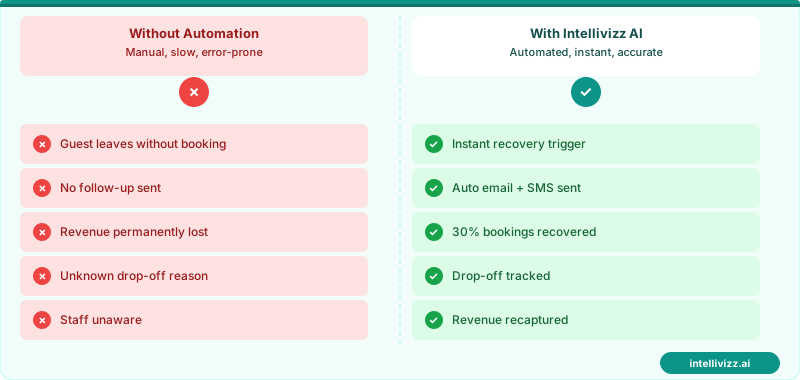
- Within 1 hour: SMS or email — "Looks like you didn't finish booking your [appointment/reservation]. Your [date/time] slot is still available. Complete your booking: [link]"
- 24 hours later: Follow-up with social proof — "Other guests loved their experience at [venue]. Your [date/time] is still open: [link]"
- 48 hours later: Final message with urgency — "Your [date/time] slot is filling up. Book now to secure your spot: [link]"
Recovery Rates by Industry
| Industry | Abandonment Rate | Recovery Rate (Automated) | Revenue Impact |
|---|---|---|---|
| Hotels | 75% | 25-35% | $50K-$200K/year |
| Restaurants | 60% | 15-25% | $20K-$60K/year |
| Medical/Dental | 65% | 20-30% | $40K-$120K/year |
| Fitness/Gyms | 70% | 20-30% | $15K-$50K/year |
| Golf Courses | 55% | 15-25% | $25K-$80K/year |
| Salons/Spas | 65% | 20-30% | $20K-$60K/year |
Optimizing Recovery Messages
Timing
The first recovery message is the most critical. Messages sent within 1 hour of abandonment achieve 3x the conversion rate of messages sent after 24 hours. The sweet spot is 30-60 minutes — soon enough that the person remembers what they were doing, but not so immediate that it feels intrusive.
Personalization
Generic "complete your booking" messages underperform personalized ones by 40%. Include:
- The specific date and time they selected
- The specific service or room type they chose
- Their first name (if captured)
- A direct link that returns them to exactly where they left off (not the homepage)
Incentives
Should you offer a discount to recover bookings? Use caution — training customers to abandon for discounts is counterproductive. Instead:
- First message: No incentive — just a helpful reminder with a direct booking link
- Second message: Add value without discounting ("Complimentary welcome drink with your reservation")
- Third message: Small incentive only for high-value bookings ("10% off for booking today")
🏨 Guest experience starts before check-in
From manual processes to automated excellence
Technical Implementation
Most modern booking platforms support abandoned booking detection. The key components:
- Booking system integration: Detect incomplete sessions and capture partial form data
- Communication automation: Trigger email/SMS sequences based on abandonment events
- Deep linking: Generate links that restore the user's booking progress exactly where they left off
- Exclusion rules: Don't send recovery messages if the person completed the booking through another channel (phone call, in-person)
- Frequency caps: Limit recovery attempts to prevent annoying frequent visitors
Combining with Other Automation
Abandoned booking recovery is one piece of a larger conversion optimization strategy. For maximum impact, combine with:
- Speed-to-lead automation — capture and respond to new leads before they abandon
- No-show recovery — for leads who book but don't show up
- AI lead follow-up — for leads who inquire but haven't started the booking process yet
Together, these systems create a closed-loop funnel where no lead falls through the cracks at any stage — from first inquiry to completed visit.
Frequently Asked Questions
Is abandoned booking recovery HIPAA-compliant for medical practices?
Yes, when implemented correctly. Recovery messages should reference the booking action, not the medical reason. "You started scheduling an appointment — would you like to complete it?" is fine. Mentioning specific conditions or treatments is not.
Does this work for phone bookings?
Not directly — abandoned booking recovery targets online and digital booking flows. For phone-based operations, AI receptionists serve the same purpose by keeping callers engaged through the booking process instead of letting them hang up and forget.
🔄 Two-thirds of bookings are abandoned. Most can be recovered automatically.
Re-engage drop-offs before they book with your competitor.
The Anatomy of a Booking Drop-Off
Analytics data from online scheduling platforms consistently shows the same pattern: the highest abandonment point isn't the first screen — it's the provider selection or date/time selection screen. This is where intent is high but friction peaks. Users encounter a calendar with limited availability, providers they don't recognize, or a time selection interface that requires too many clicks. The fix isn't always a better recovery sequence — sometimes it's removing the friction that caused the drop-off in the first place.
Before investing in recovery automation, run a funnel analysis on your booking flow. Identify where users exit. If 60% drop off at date selection, the problem is calendar availability or UX — recovery sequences won't fix that. If users complete date selection and drop at payment, recovery automation with an incentive will be far more effective.
Recovery Sequence Design Principles
Effective abandoned booking recovery shares design principles with e-commerce cart abandonment: speed, relevance, and a clear path back. The sequence should trigger within 15 minutes of abandonment (not the next morning), reference the specific service or provider the person was browsing, and include a direct link back to exactly where they left off — not the homepage.
| Recovery Touchpoint | Send Time | Channel | Recovery Rate |
|---|---|---|---|
| Message 1 | 15 min after drop-off | SMS | 18–24% |
| Message 2 | 2 hrs after drop-off | 10–14% | |
| Message 3 (with offer) | 24 hrs after drop-off | 6–10% |
Recovery automation pairs naturally with a broader no-show recovery automation strategy — together they address both pre-booking and post-booking drop-off.
Ready to get started with automation? Explore our AI automation solutions, or read our guide to 7 Ways Hotels Are Using AI to Improve Guest Experience....