
Private Equity Deal Sourcing Automation: Find Better Deals Faster with AI-Powered Screening
The Deal Sourcing Bottleneck
Private equity firms operate in a paradox of abundance: there's no shortage of deal flow, but finding the right deals is extraordinarily time-consuming. The typical lower-middle-market firm reviews 100-200 opportunities for every transaction it closes, with junior team members spending 60-70% of their time on initial screening that yields a 2-5% conversion rate. Once deals close, portfolio company reporting automation and LP investor relations automation keep stakeholders informed without manual data pulls.
This manual screening model has three critical flaws: it's slow (competitors see the same deals faster), it's inconsistent (screening criteria drift based on who's reviewing), and it misses opportunities that don't fit the team's pattern recognition but would actually be excellent investments.
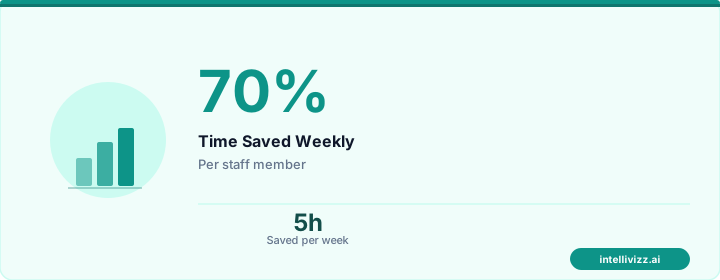
📊 Portfolio visibility drives better outcomes
The data speaks for itself
How AI Deal Sourcing Works
Automated Deal Flow Aggregation
AI systems aggregate deal flow from multiple sources into a single, searchable pipeline:
- Broker networks: CIMs and teasers from investment banks, parsed and categorized automatically
- Direct proprietary sourcing: AI scans databases (PitchBook, Capital IQ, LinkedIn) for companies matching your investment thesis
- Inbound inquiries: Web form submissions and email inquiries are captured, deduplicated, and routed
- Industry events and conferences: Post-event follow-ups are automated with context from meeting notes
AI-Powered Screening
Once aggregated, AI applies your firm's investment criteria to score and prioritize opportunities:
- Financial fit: Revenue, EBITDA, growth rate, and margin profile matched against your fund's parameters
- Industry alignment: NLP analysis of business descriptions against your sector focus areas
- Geographic relevance: Location-based filtering for regionally focused strategies
- Deal structure compatibility: Majority vs minority, platform vs add-on, leverage capacity
- Historical pattern matching: Comparison to characteristics of your firm's successful past investments
Intelligent Routing and Prioritization
Screened opportunities are automatically routed to the right team members:
- High-score matches go directly to deal partners with a summary brief
- Medium-score matches queue for associate review with flagged areas of interest
- Low-score matches are declined automatically with a courteous response to the broker
Building Your Deal Sourcing Funnel
| Stage | Manual Process | Automated Process |
|---|---|---|
| Inflow | 50-100 teasers/month, reviewed manually | AI aggregates from all sources, deduplicates |
| Initial screen | Associate reviews each teaser (30-45 min) | AI scores in seconds, surfaces top 20% |
| Deep screen | VP reviews CIM (2-3 hours each) | AI extracts key metrics; human reviews pre-analyzed summary |
| LOI | Partner decision based on memo | AI-generated investment highlight with comparable deals |
Proprietary Deal Sourcing at Scale
The greatest value from deal sourcing automation comes from proprietary outreach — finding companies that aren't on the market yet:
- AI identifies companies matching your acquisition criteria from public and proprietary databases
- Automated outreach campaigns contact owners or CEOs with personalized messages
- Response tracking and follow-up sequences maintain the relationship over months
- When an owner signals interest, the opportunity is flagged for immediate partner attention
Firms using automated proprietary sourcing report 30-40% of their closed deals originating from AI-identified targets — deals they never would have found through traditional broker channels.
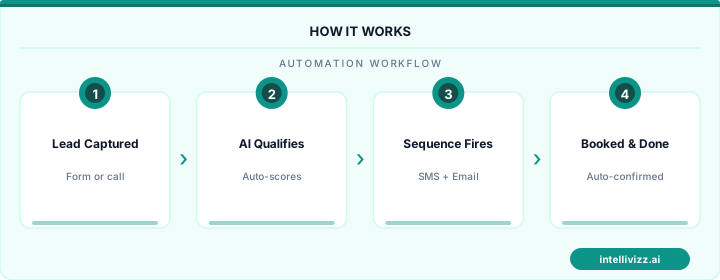
📊 Portfolio visibility drives better outcomes
Smart technology, better results
Integration with Due Diligence
When a deal advances past screening, the data collected during sourcing flows directly into the AI-powered due diligence process, eliminating duplicate data entry and providing a comprehensive deal file from first contact through close.
Measuring Deal Sourcing Efficiency
- Screening velocity: Time from teaser receipt to pass/advance decision (target: <24 hours)
- Conversion rate by source: Which channels produce the highest-quality deal flow?
- Team utilization: % of associate time on screening vs value-added analysis
- Proprietary deal %: Share of pipeline from proactive sourcing (target: 30%+)
- Cost per closed deal: Total sourcing spend ÷ deals closed per year
Deal Scoring and Pipeline Prioritization at Scale
The volume problem in private equity deal sourcing is well documented: mid-market firms routinely evaluate 200–400 opportunities per year to close 5–10 transactions. Without systematic scoring and prioritization, associates spend disproportionate time on companies that would never survive a first-pass screen, while genuinely promising opportunities receive inadequate attention during the narrow window when sellers are receptive. Automated deal scoring changes this equation by applying a consistent, weighted evaluation framework the moment a new company enters the pipeline.
An effective automated scoring model integrates multiple data dimensions simultaneously. Financial fit is assessed against defined criteria — EBITDA range, revenue trajectory, margin profile — using the most recent available data from public filings, PitchBook, or direct data room inputs. Strategic fit scoring evaluates alignment with the fund's sector thesis, geographic preferences, and add-on acquisition potential. Sourcing channel score reflects the quality of the introduction: proprietary deal (highest weight), banker-run process (lower weight), warm referral. Management quality signals — assessed from LinkedIn tenure data, reference network proximity, and operator track record in databases — contribute a behavioral dimension to the quantitative model. Combined, a weighted composite score ranks every opportunity against current pipeline, enabling partners and associates to allocate diligence hours proportionally to deal quality rather than deal volume.
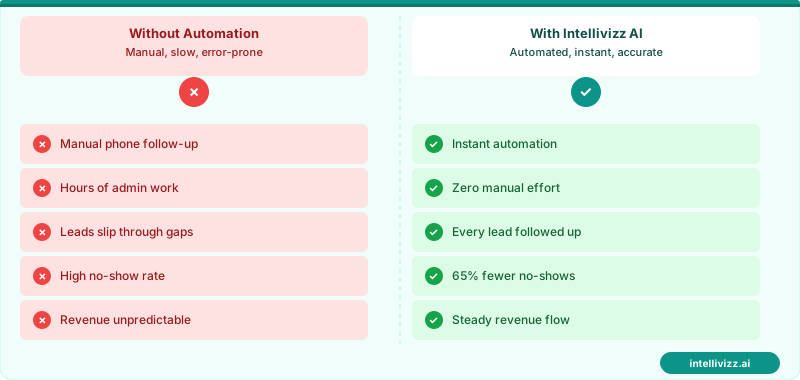
📊 Score Every Deal. Focus on the Best Ones.
Automated pipeline scoring cuts initial review time by 60% for leading PE teams
Relationship Intelligence and Proprietary Flow Automation
The sourcing advantage in private equity is ultimately a relationship advantage. Firms that close the best deals at favorable terms are those with the deepest, most current relationships with CEOs, founders, and intermediaries — relationships maintained through consistent, relevant outreach rather than sporadic contact driven by deal need. This is precisely where relationship intelligence automation delivers compounding value over time.
Modern CRM platforms integrated with deal sourcing automation track every touchpoint with a target company or intermediary: email opens, meeting notes, fund communications, co-investment interactions, and portfolio company connections. The system surfaces relationship gaps — target companies that have gone 90+ days without contact, bankers who have sent three deals to a competitor but none to your fund, and portfolio CEOs whose networks include three companies in the fund's active target list. Automated outreach cadences maintain warmth without requiring a calendar reminder: a quarterly industry insight, a congratulatory note on a company milestone, or a relevant article sent at the right moment. The compounding effect is measurable — firms that systematize relationship maintenance report 30–40% higher proprietary deal flow ratios compared to peers relying on manual outreach.
| Sourcing Channel | Typical Win Rate | Avg. Entry Multiple | Automation Leverage |
|---|---|---|---|
| Proprietary (direct outreach) | 12–18% | 7.5–9x EBITDA | High — relationship nurture sequences |
| Warm referral (network) | 8–12% | 8–10x EBITDA | Medium — contact scoring & gap alerts |
| Banker-run process | 5–8% | 10–13x EBITDA | Low — process tracking only |
| Unsolicited inbound | 2–4% | Variable | Medium — automated pre-screen scoring |
For PE teams building an integrated operations infrastructure around deal flow, the broader guide on private equity portfolio monitoring automation covers how the same data infrastructure that powers deal sourcing can be extended to portfolio company KPI tracking and board reporting — creating a unified intelligence layer from origination through exit.
Operationalizing Automation Across the Sourcing Team
Adoption is the most common failure mode for deal sourcing automation initiatives. Technology that surfaces relationship gaps, scores inbound opportunities, and tracks outreach cadences creates value only when the sourcing team uses it consistently — updating contact notes, logging calls, and responding to system alerts rather than reverting to email-based tracking and personal spreadsheets. The firms that achieve sustained productivity gains from deal sourcing automation treat the technology adoption process as a change management project with the same rigor applied to the technical implementation itself.
Effective adoption strategies for PE deal sourcing teams include: designating a sourcing data champion (typically an associate or VP-level team member) who owns CRM hygiene and coaches colleagues on platform use; establishing weekly deal review protocols that use the system's pipeline view rather than manually assembled reports; setting minimum CRM activity standards — all outreach logged, all meetings captured, all company record updates completed within 24 hours — with partner visibility into compliance; and running quarterly relationship gap reviews that use the system's data to identify portfolio and deal network blind spots. These process disciplines, more than any specific technology feature, determine whether automation creates the measurable sourcing advantage that the technology is capable of delivering.
The measurable output of a well-implemented deal sourcing automation program — more proprietary deal flow, lower average entry multiples, higher close rates from quality pipeline — compounds over time as the relationship database deepens and the scoring model is calibrated against actual investment outcomes. Firms that have operated systematic sourcing automation for three or more years consistently report that their proprietary deal origination percentage has increased meaningfully versus their pre-automation baseline, that associates spend more time in substantive due diligence conversations and less time on administrative pipeline management, and that partner attention is more precisely focused on the subset of opportunities with the highest strategic and financial fit. The initial implementation investment is typically recovered within 6–12 months through a single proprietary deal closed at a lower multiple than comparable banker-run transactions.
For PE firms at the earlier stages of operations infrastructure development — building the foundational playbook before implementing advanced sourcing automation — the guide on private equity portfolio monitoring automation provides a useful framework for understanding how deal-stage data infrastructure connects to portfolio-stage monitoring requirements, ensuring that the data architecture built for sourcing is designed to persist and grow in value through the investment lifecycle.
Ready to leverage AI across your portfolio? Explore our private equity automation solutions, or read our guide to PE Portfolio Company KPI Dashboard: Design, Data....
Relevant AI Automations
Investor Relations Automation Suite
Transform LP communications from weeks of work to one click
AI Voice Agent — Investor & Deal Source Receptionist
AI voice agent answers inbound calls from LPs, deal sources, and founders 24/7 — captures intent, qualifies the caller, and books follow-up calls automatically
Portfolio Company Reporting Bot
Automate quarterly data collection from portfolio companies