
Contact Lens Reorder Automation: Prescription Tracking, Expiration Alerts, and Revenue Recovery
The Contact Lens Revenue Leak Every Optical Practice Has
Contact lens sales represent 25–40% of total revenue for a typical optometry practice, yet most practices manage their contact lens reorder business almost entirely passively. A patient receives their annual exam, gets fitted, and purchases their first supply. After that, the practice hopes the patient returns — to the practice, rather than to 1-800-Contacts, Costco Optical, or their insurance's mail-order benefit — when they run out of lenses. The hoped-for return happens less than half the time.
The math behind the revenue leak is straightforward. A patient wearing daily disposable contact lenses (90-lens annual supply for each eye) purchases approximately $400–$600 in lenses annually. If that patient self-manages reorders and 40% of the time purchases from an online retailer rather than the practice, the practice loses $160–$240 in revenue per patient annually, before accounting for the patients who simply stop wearing contacts without notifying anyone.
Contact lens reorder automation systematically closes this gap by tracking each patient's expected reorder date based on their supply, sending timely and convenient reorder prompts that drive purchases back to the practice, and integrating with vision plan coverage to help patients understand their remaining benefits before the policy year resets. This article covers the full automation architecture, from prescription tracking through dispensing system integration.
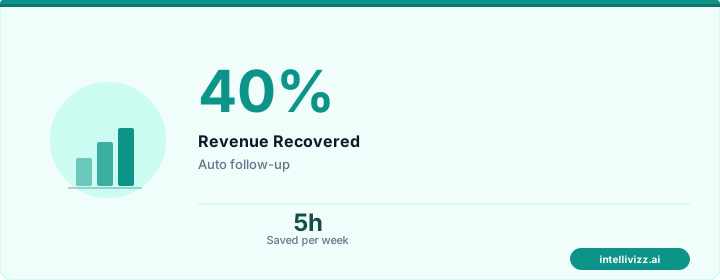
👁️ Reorder Reminders That Arrive Before Patients Run Out
Supply tracking, prescription expiration, and vision plan alerts — automated
Supply-Based Reorder Tracking: 30/60/90 Day Schedules
The foundation of contact lens reorder automation is supply tracking — knowing, for each patient, when their current supply is expected to run out based on their lens type and the quantity dispensed at their last purchase. The calculation varies by lens modality:
| Lens Modality | Standard Supply | Expected Duration | Reorder Prompt Timing |
|---|---|---|---|
| Daily disposables (1-day) | 90 lenses/eye | 3 months | 10 days before supply end |
| Bi-weekly lenses | 6 pairs | 3 months | 10 days before supply end |
| Monthly lenses | 3 pairs | 3 months | 2 weeks before supply end |
| Daily disposables (annual supply) | 360 lenses/eye | 12 months | 6 weeks before supply end |
| Specialty/toric/multifocal (monthly) | 3 pairs | 3 months | 3 weeks before supply end |
For patients who wear lenses less frequently (occasional wear, backup pairs), supply duration extends beyond the standard calculation. The automation system should accommodate an "actual wear frequency" modifier — entered by the dispensing optician or captured from the patient during intake — to prevent reorder prompts that arrive before the patient actually needs lenses. An early prompt for a genuine need is helpful; a prompt for a supply the patient knows they still have at home is spam.
Patient-Reported Supply Adjustment
The most sophisticated reorder automation systems allow patients to self-report their remaining supply when they receive a reorder prompt, adjusting the next prompt accordingly. A patient who replies "I still have about 2 months left" receives their next reorder prompt adjusted to that remaining duration — and the system logs the interaction for the dispensing record. This two-way communication capability significantly reduces opt-out rates from reorder reminder sequences, because patients experience the system as responsive rather than indifferent to their actual situation.
Prescription Expiration Alerts and Annual Exam Integration
In most states, contact lens prescriptions expire after one to two years. When a prescription expires, a patient cannot legally purchase contact lenses without a new examination — even if they want to reorder the same lens they have been wearing for three years. For practices, prescription expiration creates a critical juncture: a patient whose prescription is expiring is either going to schedule an exam with your practice, or they are going to schedule one elsewhere (or, in the case of online-only retailers, attempt to extend the prescription through online renewal services that bypass in-person examination).
An automated prescription expiration alert sequence initiates 60–90 days before expiration:
- 90-day alert: Informational notification that the patient's contact lens prescription will expire in 90 days. Includes a scheduling link for the annual exam and notes that a new prescription will be required to continue ordering lenses after expiration.
- 60-day reminder: More urgent prompt with appointment availability highlighted. If the patient has not yet scheduled, the message frames the exam as enabling their next lens order — not as a compliance requirement.
- 30-day final notice: Direct communication that the prescription expires in 30 days and that lens orders will not be fillable after expiration without a new exam. Direct appointment link with urgency framing.
- Post-expiration outreach: If the patient's prescription has lapsed and they have not rescheduled an exam, a recovery sequence follows — offering to fit them back in, acknowledging the inconvenience of letting the prescription lapse, and making scheduling as frictionless as possible.
The prescription expiration alert sequence is closely related to — and often combined with — the annual exam recall workflow. For practices with a mature optometry recall system, the contact lens prescription alert integrates naturally with the existing recall sequence. Our guide to optometry patient recall automation covers the full annual recall workflow, including how prescription expiration alerts and routine exam reminders can be combined without over-communicating with patients.
Vision Plan Coverage Automation
Most patients with vision insurance are unaware of the exact status of their contact lens benefit — specifically, how much of their annual allowance has been used, when their benefit year resets, and whether they would benefit from a year-end purchase to maximize their coverage before it expires. This information gap results in two common patient behaviors that cost the practice revenue: patients who purchase half-year supplies when they have enough benefit coverage to purchase a full year, and patients who let benefit dollars expire unused before the plan year resets.
An automated vision plan coverage prompt, sent 60–90 days before the patient's plan year end, can address both patterns:
- Notifies the patient of their remaining contact lens benefit dollars for the current plan year.
- Estimates the cost of a full annual lens supply after benefit application.
- Includes a direct link to place a lens order or contact the practice to discuss coverage.
- Creates urgency by noting that unused benefits expire at the plan year end.
For practices managing complex multi-plan optical dispensing workflows, the adjacent automation for optical order fulfillment is covered in our guide to optical order-ready notifications, which addresses the post-order communication workflow — from lab receipt confirmation through patient pickup notification.
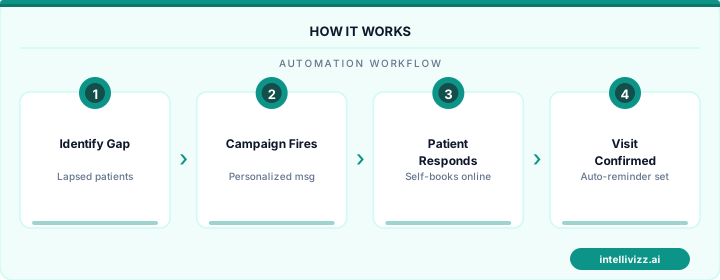
💳 Vision Plan Benefits Used Before They Expire
Automated benefit reminders drive year-end lens purchases and exam scheduling
Brand-Specific Reorder Automation
Contact lens brands have significantly different reorder dynamics — patient loyalty is high for some brands (Acuvue, Biofinity) and lower for commodity daily disposables. Brand-specific reorder automation adjusts messaging and urgency based on the patient's current lens:
- Acuvue (Johnson & Johnson): High patient loyalty, strong rebate programs ($100–$200 annual rebate with qualifying purchases). Reorder prompts should reference available rebates and annual rebate submission deadlines. J&J Vision also offers a MyAcuvue rewards program that can be highlighted in reorder communications.
- Dailies (Alcon): Alcon's Precision1 and Total1 lines carry premium pricing. Reorder prompts can reference Alcon's rebate offers and loyalty pricing for patients who purchase through the practice rather than third-party retailers.
- Biofinity/Proclear (CooperVision): Often purchased in 6-pair economy boxes. Reorder prompts can highlight the per-lens cost advantage of practice purchase versus online retailers when factoring in shipping costs and potential insurance billing advantages.
- Specialty lenses (toric, multifocal, scleral): These patients have the highest switching cost and lowest online reorder rates — they require fitting expertise that online retailers cannot provide. Reorder prompts for specialty lens patients should emphasize fit-check appointments alongside supply reorders.
Patient Portal vs. Phone Reorder Workflows
Contact lens reorder automation functions most effectively when it directs patients to a frictionless digital reorder pathway rather than a phone call. The friction difference matters: a patient who receives a reorder prompt with a direct link to an online reorder form will convert at 3–5x the rate of a patient who receives a prompt to call the office during business hours.
Effective digital reorder pathways for optometry practices include:
- Practice patient portal reorder: Integration with practice management platforms (Eyefinity, RevolutionEHR, iMedicWare) that allow patients to log into their existing portal and request a lens reorder. The best implementations pre-populate the reorder form with the patient's current lens prescription and last order details, reducing the reorder to two or three confirmatory clicks.
- Text-to-order: For practices targeting younger, mobile-first patients, a text message with a one-click ordering link (landing on a mobile-optimized page) outperforms email-based portal links substantially in conversion rate.
- Phone reorder with AI assist: Patients who prefer phone reorder are routed to an AI-assisted reorder conversation that collects their preference, looks up their prescription on file, confirms the order, and initiates the ordering workflow — without requiring front desk involvement for straightforward reorders of established prescriptions.
Integration with Optical Dispensing Systems
Reorder automation connects to the practice's optical dispensing system to trigger the actual lens order with the manufacturer or distributor when the patient confirms their reorder. Key integration points include:
- Prescription verification: The system verifies that the prescription on file is current and within expiration before allowing a digital reorder to proceed. Expired prescriptions automatically route the patient to exam scheduling rather than to the lens order form.
- Inventory check: For practices with in-office lens inventory, the system checks whether the requested lens is in stock before completing the order — avoiding the scenario where a patient is promised a same-day pickup that cannot be fulfilled.
- Distributor ordering: For direct-to-distributor ordering (ABB Optical, CooperVision, Alcon, J&J), the confirmed patient reorder initiates the distributor order automatically — no front-desk order entry required.
- Order status notifications: Once the distributor order is placed, automated status updates notify the patient when their lenses have shipped and when they are ready for pickup or have been delivered.
Revenue Impact: The $50–$150 Per Patient Annual Recovery
The revenue impact of contact lens reorder automation is highly measurable. Industry benchmarks for practices implementing systematic reorder automation typically show:
| Impact Category | Baseline (No Automation) | With Reorder Automation | Annual Recovery Per Patient |
|---|---|---|---|
| Reorder capture rate | 45–55% | 70–80% | $60–$120 (daily disposable patient) |
| Annual supply vs. partial supply rate | 35–40% | 55–65% | $80–$160 per converted patient |
| Year-end benefit utilization | 50–60% | 75–85% | $30–$80 in recovered benefit revenue |
| Exam recall via expired Rx alert | 25–35% | 50–65% | $90–$200 exam + lens value per patient |
For a practice with 500 active contact lens patients, a 15-percentage-point improvement in reorder capture rate represents 75 additional annual reorders — conservatively $30,000–$45,000 in additional annual contact lens revenue. The investment in automation to generate this recovery is typically $300–$600/month — a 5–10x return on a single revenue stream.
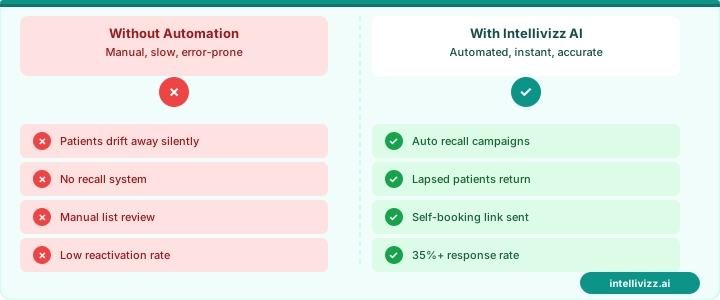
💰 $50–$150 Per Patient Recovered Annually
Measurable revenue impact from automated supply tracking and reorder prompts
For optometry practices evaluating the full spectrum of AI-powered patient communication — from initial scheduling through annual recall, contact lens reorder, and optical dispensing notification — the resource on AI receptionists for optometry offices provides a comprehensive framework for building an integrated patient communication system. Contact lens reorder automation is one of the highest-ROI components of that broader system, precisely because it converts a passive revenue stream into an active, measurable one.
Ready to modernize your practice? Explore our healthcare automation solutions.