
Real Estate Client Referral Program: Automate Your #1 Lead Source for Consistent Closings
In real estate, referrals account for 40-65% of transactions for top-producing agents — yet most agents have no systematic referral program. They rely on clients spontaneously recommending them, which happens inconsistently. An automated referral program turns your past client database into a predictable, self-sustaining lead generation machine.
Why Real Estate Referrals Need Automation
The typical real estate transaction creates a natural referral moment: the client is thrilled with their new home. But without a system, that moment passes. Two weeks later, they're unpacking. A month later, daily life has resumed. By the time a friend mentions they're house-hunting, the agent's name isn't top of mind anymore.
Automation keeps you top of mind through the entire post-transaction period and beyond — so when the referral opportunity arises, your name is the first one they think of.
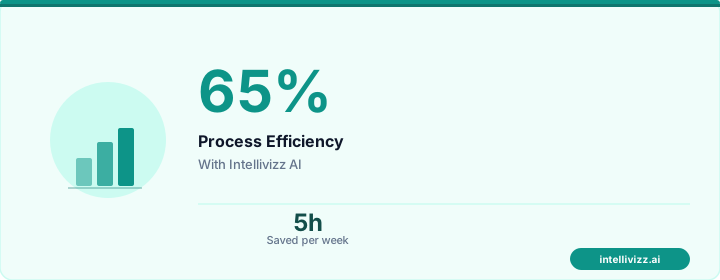
🏠 Speed wins in real estate — automate your lead response
See how automation transforms industry operations
The Automated Real Estate Referral System
Phase 1: Post-Closing Engagement (Days 1-30)
Immediately after closing: congratulations message with a home photo, day 7 — check-in about move-in experience and home satisfaction, day 14 — "Welcome to the neighborhood" guide (local restaurants, services, utilities), day 21 — request for Google review with direct link, and day 30 — first referral ask: "Know anyone thinking about buying or selling? I'd love to help them the way I helped you. Share my info: [referral link]."
Phase 2: Ongoing Nurture (Monthly/Quarterly)
Monthly market updates with neighborhood-specific data, quarterly personal check-ins ("How's the house treating you?"), anniversary messages on their home purchase date, seasonal home maintenance tips, and periodic referral reminders woven into valuable content.
Phase 3: Lifecycle Triggers
Life changes trigger move decisions. Monitor and reach out around: home equity milestones ("Your home has appreciated $X since you bought — curious about your options?"), interest rate changes (refinance opportunities create touchpoints), neighborhood development news, school rating changes (relevant for family clients), and tax assessment changes.
Referral Tracking and Attribution
Each past client gets a unique referral link that tracks: who they referred, when the referral contacted you, whether the referral became a client, and the transaction value (for commission-based rewards). This data lets you identify your top referrers and double down on nurturing those relationships.
Reward Structures for Real Estate
Common referral rewards: closing gift for the referrer ($100-$500 gift card or experience), donation in the referrer's name to a charity of their choice, home service gift (cleaning, landscaping, or handyman credit), exclusive access to pre-listing events, and tiered rewards (bigger rewards for multiple referrals).
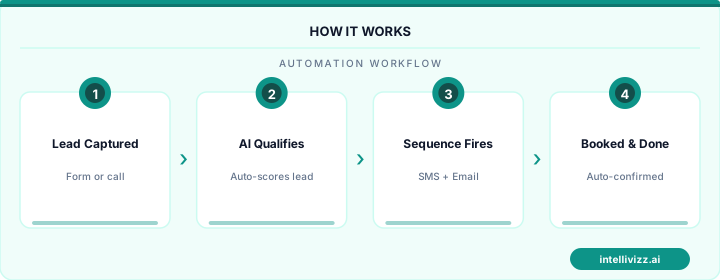
🏠 Speed wins in real estate — automate your lead response
From manual processes to automated excellence
Integration With Real Estate CRM
Your referral program should integrate with: your CRM (Follow Up Boss, kvCORE, LionDesk, BoomTown) for contact management and tracking, your CRM automation workflows for nurture sequences, Google Business Profile for review generation, and your website for referral landing pages.
Expected Results
- Referral rate: 15-25% of past clients generate at least one referral per year (vs. 5-8% without a program)
- Referral conversion: 50-70% of referred leads convert to clients (vs. 2-5% for cold leads)
- Cost per referral lead: $50-$200 (reward + system cost) vs. $500-$2,000 for paid advertising
- Lifetime value: Referred clients refer others at 2x the rate of non-referred clients
Your past clients are your most valuable marketing asset. Book a free consultation to see how automated referral programs work for real estate agents.
Related Reading
- Best AI Tools for Real Estate Agents 2026
- Real Estate Review Generation
- Referral Program Automation Guide
Building a Systematic Referral Program vs. Relying on Organic Referrals
Most real estate agents receive some referrals naturally — satisfied clients mention them to friends, family members ask for recommendations. But organic referral networks are inconsistent, unpredictable, and impossible to scale. A systematic referral program transforms referral generation from a random occurrence into a predictable business process. The difference is dramatic: agents with systematic referral programs generate 3-5x more referral transactions annually than agents who rely on organic referrals, according to NAR data across multiple market cycles.
The foundation of a systematic real estate referral program is a structured post-transaction engagement sequence. The typical real estate client relationship ends at closing — the agent celebrates the transaction, hands over the keys, and moves on to the next deal. Clients feel this disconnection acutely, and without ongoing engagement, the agent becomes just one of many service providers clients have used over the years. The referral window is highest in the 30-90 days after closing (when clients are in their new home, talking about it constantly, and actively recommending services to friends asking about the move) but most agents are completely absent during this critical period.
An automated post-closing engagement sequence keeps the agent present during this high-referral window. A series of touchpoints — move-in day congratulations, one-week check-in, first-month home tip, neighborhood guide for new residents, 90-day check-in with home maintenance reminder, and a 6-month market update — maintains the relationship without requiring manual effort. Each touchpoint provides value to the client while keeping the agent's name top-of-mind when referral conversations arise.
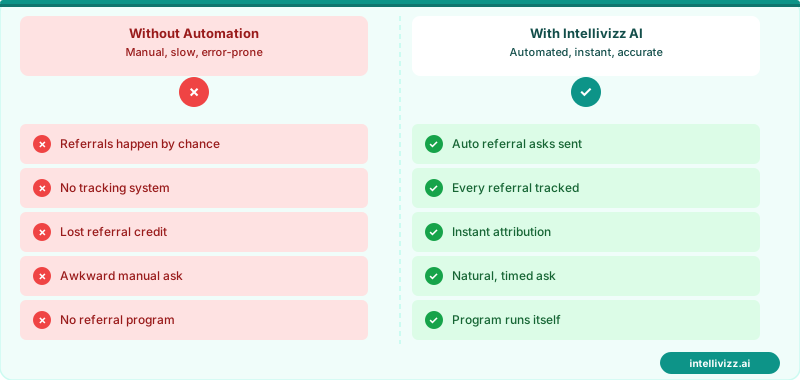
🏡 The referral window peaks at 30-90 days post-closing — automation keeps you in it
Agents with systematic referral programs generate 3-5x more referral transactions annually.
Incentive Structures for Real Estate Referral Programs
Real estate referral program incentives must navigate NAR ethical guidelines and state real estate commission regulations, which vary significantly. In most states, paying referral fees to unlicensed individuals (including past clients) in connection with real estate transactions is prohibited or strictly regulated. Agents should consult their broker and state licensing board before implementing any cash referral incentive program. That said, there are several compliant incentive structures that effectively drive referrals.
Gift-based appreciation programs — where referring clients receive a meaningful thank-you gift (not contingent on closing, just on the referral itself) — are generally permissible across most states and are the most common approach. Home services gift cards ($50-$100 at Home Depot or local home service providers), local restaurant gift cards, or charitable donations in the client's name are all common approaches. The key principle is that the gift is positioned as appreciation for the introduction, not as compensation contingent on the transaction completing.
| Referral Incentive Type | Typical Value | Compliance Considerations | Conversion Impact |
|---|---|---|---|
| Home services gift card | $50–$150 | Generally permissible (not transaction-contingent) | +18% referral rate |
| Restaurant gift card | $75–$200 | Generally permissible | +22% referral rate |
| Charitable donation in client name | $50–$100 | Generally permissible | +12% referral rate |
| VIP annual home review | Service-based | Permissible (service, not fee) | +35% client loyalty |
Automating Referral Tracking and Follow-Up
The operational challenge of referral programs is tracking — knowing who referred whom, ensuring the referring client receives their appreciation gift promptly, and following up with the referred prospect at the right cadence. Manual referral tracking in spreadsheets or sticky notes fails because it requires consistent data entry during busy periods when agents are focused on active transactions. Automated referral management systems solve this by creating a digital referral chain that logs every referred contact, tracks their status in the pipeline, and triggers the appropriate appreciation gift and follow-up sequences automatically.
When a referring client's name is attached to a new prospect's record in the CRM (whether the client submitted the referral through a web form, the agent entered it after a call, or the prospect mentioned the referral during their first contact), the system starts two parallel sequences: one engaging the referred prospect through the sales pipeline, and one notifying the referring client that their introduction has been received with a warm appreciation message. When the referred prospect closes a transaction, the system automatically triggers the gift fulfillment workflow — no manual follow-through required. This level of automation scales referral programs to volumes that would be impossible to manage manually. Pair this with a referral program automation approach similar to what healthcare practices use to understand how systematic referral tracking can transform any service business.
Scaling Your Referral Program as Your Business Grows
Real estate referral programs that work well with a 50-client book of business need to be systematized differently as the business scales to 200, 500, or 1,000 past clients. The personal touch that characterizes successful referral relationships — personalized notes, remembered details about family milestones, genuine interest in the client's life beyond the transaction — must scale through a combination of CRM data capture and systematic touchpoint automation rather than purely manual effort. Agents with large past-client databases who rely on memory and goodwill alone invariably see their referral rate decline as their database grows and personal bandwidth limits attention per client.
CRM configuration for referral program scaling includes: capturing detailed client notes (family members' names, children's ages, interests mentioned during transaction, first-anniversary date in the new home), setting annual contact reminders for each client, logging all referral activity (incoming referrals attributed to each source client, conversion outcomes), and tracking lifetime referral value per client (how much total business has this client sent, over how many years). This data enables prioritization — clients who have referred multiple transactions receive premium engagement; clients who have never referred but have been clients for years may respond to a more explicit referral request.
The most successful scaling agents develop a formal "Client Ambassador" program that identifies and nurtures their most prolific referrers. Ambassador clients might receive: a personal call from the agent on their home purchase anniversary, an invitation to an annual client appreciation event, first access to market reports and off-market listings, and a personalized end-of-year letter summarizing the market and thanking them for their continued trust and referrals. This tiered approach concentrates investment where it generates the highest return while maintaining baseline automated engagement with all past clients.
Ready to build a lead system that works while you sleep? Explore our real estate automation solutions.