
Chiropractic AI Receptionist in Northern Virginia: Scheduling, Insurance, and Wellness Plans
The Northern Virginia Chiropractic Market: High Volume, High Expectations
Northern Virginia — encompassing Fairfax County, Arlington, Alexandria, Loudoun County, and Prince William County — is one of the most health-conscious and professionally demanding markets in the country. The region's combination of federal contractors, tech workers, military families, and elite athletes creates a chiropractic patient population with specific characteristics: they are high-frequency users (maintenance care is the norm, not the exception), they have complex employer insurance plans that require careful verification, they schedule outside business hours because their work schedules don't accommodate daytime calls, and they expect the same digital experience from their chiropractor that they get from every other professional service they use.
For a chiropractic practice in Reston, McLean, Arlington, or Tysons, this means the front desk is constantly managing a high volume of scheduling calls, insurance questions, treatment plan reminders, and wellness plan enrollment inquiries — while also checking patients in, collecting copays, and supporting the clinical flow. The result is missed calls, scheduling errors, insurance verification delays, and a front desk staff under perpetual pressure.
An AI receptionist designed specifically for chiropractic workflow addresses this operational challenge without adding headcount. This article covers the specific capabilities that matter in the NoVA chiropractic market: high-frequency scheduling for maintenance patients, insurance verification for chiropractic benefit plans, new patient intake, treatment plan reminders, wellness plan enrollment, and integration with the EHR systems used by Virginia chiropractic practices.
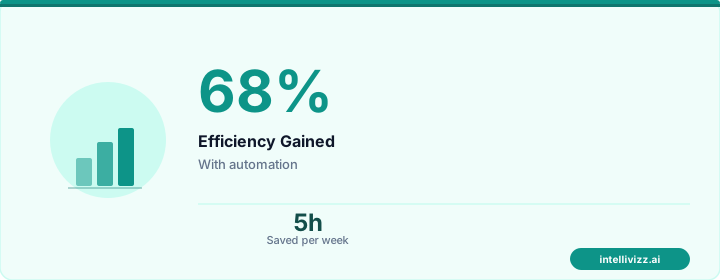
📞 Always-On Chiropractic Reception for Northern Virginia
New patients, maintenance scheduling, and insurance questions handled 24/7
The High-Frequency Scheduling Challenge in Chiropractic
Chiropractic practices differ from most other healthcare settings in one fundamental way: their best patients call the most. A patient on an active treatment plan following a motor vehicle accident may be scheduling 3 visits per week. A maintenance care patient may call every 3–4 weeks to book the next appointment. An athlete in season may need to adjust their schedule week-to-week based on competition calendars. These are high-value patient relationships — and they generate disproportionate front-desk call volume.
In a practice with 150 active patients, the scheduling call volume can reach 30–50 calls per day — most of them existing patients calling to book, reschedule, or confirm appointments they could handle through an automated system if one were available. The front desk hours spent answering these calls represent time not spent on the intake and insurance tasks that genuinely require human judgment.
Maintenance Plan Scheduling Logic
AI receptionist systems built for chiropractic can be configured with maintenance plan scheduling logic: if a patient is on a monthly maintenance plan, the system knows their preferred appointment slot, their average interval, and can proactively send a booking reminder when they are approaching their scheduled interval. When the patient calls to book, the system offers their known preferred times first, reducing the call to a 60-second confirmation rather than a 4-minute scheduling conversation.
For practices managing high appointment volume, the adjacent capability — automated appointment reminders to reduce no-shows — is covered in our comprehensive resource on AI receptionists for chiropractic offices, which details the full workflow from new patient intake through maintenance care scheduling automation.
Insurance Verification for Chiropractic: The NoVA Complexity
Chiropractic insurance verification in Northern Virginia is uniquely complex. The region's employer landscape — federal government employees on FEHB plans, tech company employees on BCBS and Aetna employer plans, military families on TRICARE — means that a single practice may verify benefits across dozens of different plan types, each with different chiropractic coverage structures.
The specific complications that make chiropractic verification demanding:
- Limited visit authorization: Many plans cover a specific number of chiropractic visits per year (commonly 20–30 visits), after which visits are either uncovered or require a new authorization. Tracking remaining visits per patient across different plan years is a constant administrative task.
- Medical necessity requirements: Some plans require documentation that visits are medically necessary rather than elective wellness care. The administrative workflow for these plans requires active prior authorization tracking.
- TRICARE chiropractic coverage: TRICARE Prime and TRICARE Select cover chiropractic at different rates and with different referral requirements. Military families in NoVA (near Fort Belvoir, Quantico, the Pentagon) represent a significant patient segment with specific coverage rules.
- Out-of-network complexity: Many NoVA chiropractic practices are out-of-network with some plans, requiring verification of out-of-network chiropractic benefits and patient responsibility calculation before the first appointment.
Automating the Verification Workflow
AI receptionist systems handle the front-end of insurance verification by collecting insurance information from new patients during the intake conversation — plan name, member ID, group number, date of birth — and routing it to the appropriate verification queue. The verification itself (calling the insurer or using an automated eligibility platform) remains a staff task, but the data collection and routing steps can be fully automated, eliminating the call-tag cycle where new patients call to schedule, staff call back to collect insurance information, and the patient calls back to confirm the appointment.
For practices comparing AI receptionist options for healthcare settings in the broader NoVA region, our guide to AI receptionists for dental offices in Arlington covers the comparable workflow for dental practices and provides useful context on how these systems perform across different healthcare specialties in Northern Virginia.
New Patient Intake Automation
New patient conversion is where AI receptionist systems deliver their most measurable impact for chiropractic practices. A prospective patient who calls a chiropractic office outside business hours — a common scenario for professionals who research providers during lunch or after work — and reaches voicemail will frequently call the next practice on their search results list. A practice with an AI receptionist captures that call, collects the patient's contact information and chief complaint, confirms the first appointment, and sends intake paperwork — all before the office opens the next morning.
New Patient Intake Workflow
- Initial call: AI receptionist greets the new patient caller, collects name, contact information, chief complaint (back pain, neck pain, headache, sports injury, etc.), and how they found the practice.
- Insurance collection: Collects insurance plan name, member ID, and group number. Informs patient that benefits will be verified before the appointment.
- Appointment scheduling: Offers the next available new patient appointment slot (typically 45–60 minutes to allow for examination). Confirms the appointment and sends an SMS confirmation with date, time, address, and parking information.
- Digital intake packet: Sends an automated email with a link to the online intake forms (health history, HIPAA authorization, insurance release) with a request to complete before the appointment. Sends a reminder 24 hours before the appointment if forms have not been completed.
- Day-before reminder: Automated SMS reminder with appointment confirmation, intake form completion check, and practice location details.
This workflow captures and converts new patients who would previously have been lost to after-hours voicemail — with no staff involvement until the completed intake packet arrives in the morning queue.
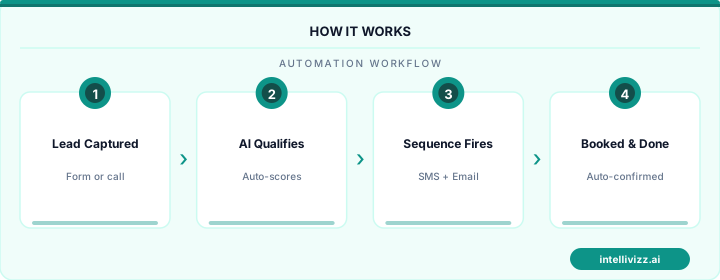
🩺 New Patients Booked While You Sleep
After-hours intake, scheduling, and intake forms — fully automated
Treatment Plan Reminders and Compliance
Patient compliance with prescribed treatment plans is one of the most significant variables in chiropractic clinical outcomes and practice revenue. A patient prescribed a 12-visit treatment plan who attends 8 visits is both undertreated clinically and contributing less revenue than planned. The gap between prescribed and completed visits in chiropractic is often driven by scheduling friction — patients who miss a visit intend to rebook but don't get around to it, and the practice doesn't have a systematic re-engagement process.
An AI receptionist system with treatment plan tracking can automate the re-engagement workflow: when a patient misses a scheduled appointment or falls behind on their treatment plan pace, the system automatically sends a re-booking prompt with a direct scheduling link. The message is warm and patient-centered — "We noticed you missed your Tuesday appointment — let's get you back on track. Here's a link to book your next visit." — not a collections-tone reminder.
For practices also managing dermatology or other specialty care patients in the Bethesda area, our guide on reducing no-shows for dermatology practices in Bethesda covers the parallel appointment compliance workflow for adjacent specialty practices.
Wellness Plan Enrollment
Wellness and maintenance care plans — monthly subscription memberships covering a set number of visits per month at a discounted per-visit rate — are a significant revenue stability tool for chiropractic practices. A patient on a $99/month wellness plan who visits twice monthly represents more predictable, higher-lifetime-value revenue than the same patient scheduling on an ad hoc basis.
An AI receptionist system supports wellness plan enrollment through two mechanisms:
- Post-treatment conversion prompts: When a patient completes their initial treatment plan and transitions to maintenance care, the AI system sends an automated wellness plan enrollment invitation explaining the benefits and pricing. Patients who click through are directed to an online enrollment form and digital payment authorization — no phone call required.
- Inbound enrollment handling: When a patient calls to inquire about wellness plan options (triggered by in-office marketing or a friend's referral), the AI receptionist can explain the available plan tiers and direct the patient to the online enrollment portal or schedule a brief consultation call with the practice manager.
After-Hours Scheduling for NoVA's Active Lifestyle Patients
Northern Virginia's active professional population schedules healthcare outside business hours at a rate significantly above the national average. Early-morning calls (6:00–8:00 AM) from patients scheduling before work, evening calls (6:00–9:00 PM) from patients scheduling after work or after training sessions, and weekend calls from athletes who realize they need an appointment on Sunday after a Saturday injury — all of these represent scheduling opportunities that a traditional front desk cannot capture.
For a chiropractic practice with a significant sports medicine or active lifestyle patient base — common in areas like Reston, McLean, and Ashburn — the after-hours scheduling capability of an AI receptionist is not a convenience feature but a competitive necessity. The practice down the street that captures the Sunday injury call gets the patient relationship. The practice that returns a voicemail Monday morning does not.
EHR and Practice Management Integration
An AI receptionist that operates independently of the practice management system creates double entry and creates scheduling errors. Effective chiropractic AI reception requires integration with the systems the practice already uses:
| Platform | Integration Capability | Common Use |
|---|---|---|
| ChiroTouch | Appointment scheduling, patient record lookup, SOAP note status | High-volume multi-provider practices |
| Jane App | Online booking integration, intake form delivery, appointment confirmation | Solo and small group practices preferring modern UX |
| Genesis Chiropractic | Full two-way scheduling and patient communication sync | Practices using Genesis for billing and outcomes tracking |
| EHRchiro | Appointment sync, patient portal integration | Practices with integrated billing workflows |
| Kareo (Tebra) | Scheduling, eligibility verification, billing integration | Practices prioritizing billing automation |
The integration architecture matters most at two points: new patient appointment creation (the AI receptionist must write the appointment to the practice management system, not just log it in a separate database) and schedule reading (the AI must have real-time visibility into available slots to offer accurate booking options). Practices evaluating AI receptionist options should verify that the system can read and write to their specific EHR before committing to implementation.
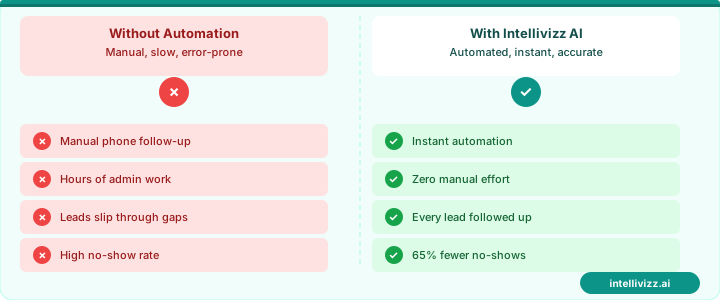
🔗 Integrated With the Software You Already Use
ChiroTouch, Jane App, and more — real-time scheduling sync
Expected ROI for Northern Virginia Chiropractic Practices
The return on AI receptionist investment for a Northern Virginia chiropractic practice with 150–250 active patients and 25–40 appointments per day typically manifests across three categories:
- New patient capture: A practice capturing 3–5 additional new patients per month from after-hours calls represents $2,100–$3,500 in first-year patient revenue per month (assuming a $700 average new patient LTV over the first year). This alone typically justifies the investment.
- No-show reduction: Automated reminder sequences reduce no-shows by 30–50% in chiropractic settings. For a practice with 5 daily appointments averaging $65 per visit and a 15% no-show rate, eliminating half of those no-shows recovers approximately $1,500/month in previously lost revenue.
- Staff capacity recovery: Offloading 30–50 scheduling calls per day from the front desk frees approximately 1.5–2.5 hours of staff time daily — time available for patient-facing tasks, insurance verification, and billing work that directly supports revenue collection.
For practices evaluating AI answering solutions across the broader healthcare spectrum — not just chiropractic but any small or mid-size healthcare practice — our guide to AI answering services for small businesses provides a vendor-agnostic evaluation framework with specific guidance for healthcare settings. The Northern Virginia chiropractic market rewards practices that invest in professional, technology-forward patient experience; an AI receptionist is increasingly a baseline expectation rather than a differentiator.
Ready to modernize your practice? Explore our healthcare automation solutions, AI Receptionist for Medical Offices: Cut Missed Calls..., or Medical Office Automation in Reston, Virginia:....
Relevant AI Automations
AI Review Management (HIPAA-Compliant)
All-in-one HIPAA-compliant review management: automated review requests, AI-powered responses, and review repurposing for web & social.
HIPAA-Compliant AI Voice Agent — 24/7 Patient Call Handling
HIPAA-compliant AI voice agent answers every patient call 24/7 — triages urgency, books appointments, and sends encrypted follow-ups
Website Live Chat → Patient Booking Funnel
AI-powered live chat on the practice website engages visitors, answers questions about services/insurance, collects cont